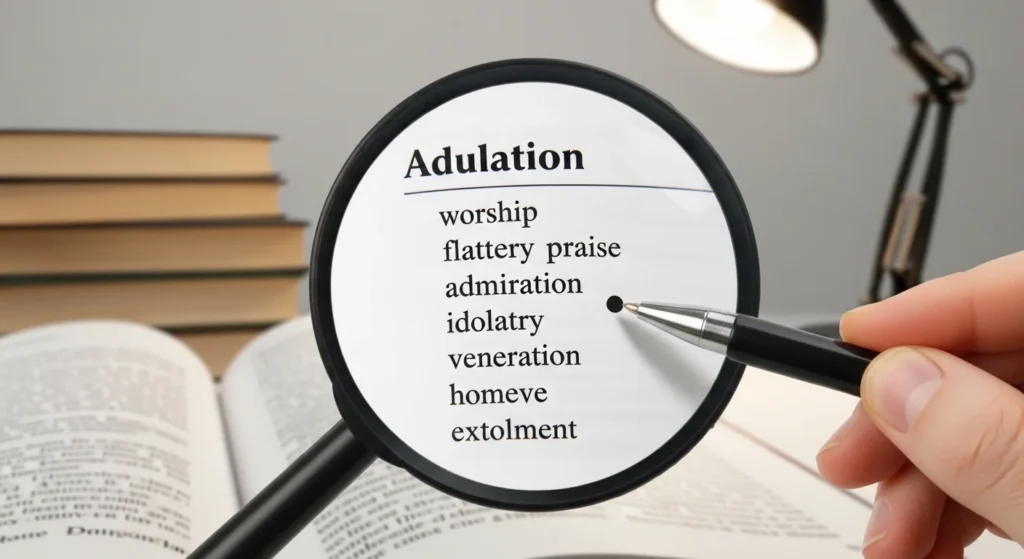
Adulation means extreme praise or admiration, often more than it deserves. Imagine a student who always flatters the teacher just to get good marks. The student may not truly respect the teacher, but uses sweet words to impress. This is a common real-life example of adulation.
The word is often used in daily speech, writing, and media when people talk about praise that feels excessive or fake.
In this article, you will learn the meaning of adulation, its synonyms with examples, pronunciation, grammar, history, and different categories. Everything is explained in simple and easy English.
Meaning of Adulation
Adulation (noun):
Excessive praise or flattery, often to gain favor.
Examples:
- He gave her constant adulation to win her support.
- The celebrity enjoyed the adulation of her fans.
Connotative Meaning
(Connotation: the emotional meaning a word carries beyond its basic definition)
- Positive tone: Deep admiration or respect
- Negative tone: Fake praise, flattery for selfish reasons
- Neutral tone: Strong appreciation without judgment
Etymology
- From Latin adulatio meaning “flattery”
Short History:
- Old English (450–1100): Word not used
- Middle English (1100–1500): Borrowed ideas of flattery from Latin
- Modern English (1500–Present): Adulation became common in formal writing
Pronunciation (US & UK – IPA)
- US: /ˌædʒəˈleɪʃən/
- UK: /ˌædjʊˈleɪʃən/
Syllables
ad-u-la-tion
Affixation Pattern of Adulation
- Root: adul (flatter)
- Prefix: none
- Suffix: -ation
Word Formation:
- Adulate (verb)
- Adulator (noun)
- Adulatory (adjective)
A List of 30 Synonyms for Adulation
1. Praise (noun)
US: /preɪz/ | UK: /preɪz/
Meaning: Expression of approval or admiration
Examples:
- She received praise for her work.
- The teacher gave him high praise.
2. Flattery (noun)
US: /ˈflætəri/ | UK: /ˈflætəri/
Meaning: Insincere praise
Examples:
- He used flattery to impress her.
- Flattery will not always work.
3. Admiration (noun)
US: /ˌædməˈreɪʃən/ | UK: /ˌædmɪˈreɪʃən/
Meaning: Respect and warm approval
Examples:
- She looked at him with admiration.
- His courage earned admiration.
4. Worship (noun)
US: /ˈwɜːrʃɪp/ | UK: /ˈwɜːʃɪp/
Meaning: Deep respect or love
Examples:
- Fans showed worship for the star.
- His followers treated him with worship.
5. Reverence (noun)
US: /ˈrevərəns/ | UK: /ˈrevərəns/
Meaning: Deep respect
Examples:
- The teacher was treated with reverence.
- She spoke with reverence about her mentor.
6. Devotion (noun)
US: /dɪˈvoʊʃən/ | UK: /dɪˈvəʊʃən/
Meaning: Strong love or loyalty
Examples:
- His devotion to his job was clear.
- She showed devotion to her family.
7. Idolization (noun)
US: /aɪˌdɑːləˈzeɪʃən/ | UK: /aɪˌdɒləˈzeɪʃən/
Meaning: Treating someone as perfect
Examples:
- The actor enjoyed idolization.
- Idolization can be unhealthy.
8. Glorification (noun)
US: /ˌɡlɔːrɪfɪˈkeɪʃən/ | UK: /ˌɡlɔːrɪfɪˈkeɪʃən/
Meaning: Praise something highly
Examples:
- The film shows glorification of war.
- His speech was full of glorification.
9. Esteem (noun)
US: /ɪˈstiːm/ | UK: /ɪˈstiːm/
Meaning: Respect and regard
Examples:
- She is held in high esteem.
- His work earned esteem.
10. Appreciation (noun)
US: /əˌpriːʃiˈeɪʃən/ | UK: /əˌpriːʃiˈeɪʃən/
Meaning: Recognition of value
Examples:
- He showed appreciation for help.
- Her effort deserves appreciation.
11. Compliment (noun)
US: /ˈkɑːmplɪmənt/ | UK: /ˈkɒmplɪmənt/
Meaning: Polite praise
Examples:
- She gave him a compliment.
- He smiled at the compliment.
12. Tribute (noun)
US: /ˈtrɪbjuːt/ | UK: /ˈtrɪbjuːt/
Meaning: Act of respect or praise
Examples:
- The song is a tribute.
- They paid tribute to heroes.
13. Acclaim (noun)
US: /əˈkleɪm/ | UK: /əˈkleɪm/
Meaning: Public praise
Examples:
- The movie got great acclaim.
- Critics gave it acclaim.
14. Applause (noun)
US: /əˈplɔːz/ | UK: /əˈplɔːz/
Meaning: Clapping to show praise
Examples:
- The crowd gave applause.
- Loud applause filled the hall.
15. Ovation (noun)
US: /oʊˈveɪʃən/ | UK: /əʊˈveɪʃən/
Meaning: Great applause
Examples:
- She got a standing ovation.
- The speech earned ovation.
16. Homage (noun)
US: /ˈhɑːmɪdʒ/ | UK: /ˈhɒmɪdʒ/
Meaning: Special honor
Examples:
- He paid homage to his teacher.
- The film is an homage.
17. Veneration (noun)
US: /ˌvenəˈreɪʃən/ | UK: /ˌvenəˈreɪʃən/
Meaning: Deep respect
Examples:
- The saint received veneration.
- People showed veneration.
18. Adoration (noun)
US: /ˌædəˈreɪʃən/ | UK: /ˌædəˈreɪʃən/
Meaning: Deep love and respect
Examples:
- Fans showed adoration.
- Her eyes were full of adoration.
19. Exaltation (noun)
US: /ˌeɡzɔːlˈteɪʃən/ | UK: /ˌeɡzɔːlˈteɪʃən/
Meaning: Raising in status or praise
Examples:
- His exaltation was clear.
- The speech showed exaltation.
20. Laudation (noun)
US: /lɔːˈdeɪʃən/ | UK: /lɔːˈdeɪʃən/
Meaning: Formal praise
Examples:
- He gave a laudation.
- The event included laudation.
21. Encomium (noun)
US: /ɪnˈkoʊmiəm/ | UK: /ɪnˈkəʊmiəm/
Meaning: High praise
Examples:
- The book received encomium.
- Critics wrote encomium.
22. Hero-worship (noun)
US: /ˈhɪroʊ ˌwɜːrʃɪp/ | UK: /ˈhɪərəʊ ˌwɜːʃɪp/
Meaning: Excessive admiration
Examples:
- He showed hero-worship.
- Fans practiced hero-worship.
23. Eulogy (noun)
US: /ˈjuːlədʒi/ | UK: /ˈjuːlədʒi/
Meaning: Speech of praise
Examples:
- She gave a eulogy.
- The eulogy was touching.
24. Commendation (noun)
US: /ˌkɑːmɛnˈdeɪʃən/ | UK: /ˌkɒmɛnˈdeɪʃən/
Meaning: Official praise
Examples:
- He received commendation.
- The award was a commendation.
25. Panegyric (noun)
US: /ˌpænɪˈdʒɪrɪk/ | UK: /ˌpænɪˈdʒɪrɪk/
Meaning: Formal public praise
Examples:
- The speech was a panegyric.
- It sounded like pure panegyric.
26. Approval (noun)
US: /əˈpruːvəl/ | UK: /əˈpruːvəl/
Meaning: Positive opinion
Examples:
- She showed approval.
- His work gained approval.
27. Respect (noun)
US: /rɪˈspɛkt/ | UK: /rɪˈspɛkt/
Meaning: High regard
Examples:
- He earned respect.
- Respect is important.
28. Honor (noun)
US: /ˈɑːnər/ | UK: /ˈɒnə/
Meaning: High respect
Examples:
- It is an honor.
- She received honor.
29. Recognition (noun)
US: /ˌrɛkəɡˈnɪʃən/ | UK: /ˌrɛkəɡˈnɪʃən/
Meaning: Acknowledgment
Examples:
- He got recognition.
- Her work deserves recognition.
30. Celebration (noun)
US: /ˌsɛləˈbreɪʃən/ | UK: /ˌsɛləˈbreɪʃən/
Meaning: Praise through events
Examples:
- The event was a celebration.
- They held a celebration.
Prototype Meaning
The most common meaning of adulation is excessive praise given to someone, often in a way that feels fake or exaggerated. People imagine fans cheering loudly or someone flattering a powerful person.
Prototype Categorization
- Sincere respect: admiration, esteem, respect
- Public praise: applause, acclaim, ovation
- Excessive praise: flattery, idolization, hero-worship
- Formal praise: encomium, panegyric, laudation
Categorization helps writers choose the right word based on tone and situation.
Antonyms of Adulation
- Criticism (noun): pointing out faults
- Condemnation (noun): strong disapproval
- Disrespect (noun): lack of respect
- Insult (noun): rude remark
- Mockery (noun): making fun
Short Questions and Answers
- What does adulation mean?
Excessive or exaggerated praise. - When should adulation be used?
Use it when praise feels too much or not sincere. - Is adulation positive or negative?
It can be both, but often has a negative tone. - How is it different from similar words?
Unlike simple praise, adulation is often excessive or fake.
Conclusion
Learning adulation and its synonyms helps you build a strong vocabulary. It improves your writing and speaking skills by giving you many word choices. You can avoid repeating the same word and express ideas clearly. Understanding tone also helps you choose the right word for the right situation. This makes your English more natural and confident. Practice these words daily in sentences and conversations. Over time, you will notice a big improvement in your language skills.

I am a linguist with 17 years of experience in English language teaching, including postgraduate-level instruction. My expertise includes English grammar, and I contribute as a content and blog writer, producing scholarly and educational language resources.