
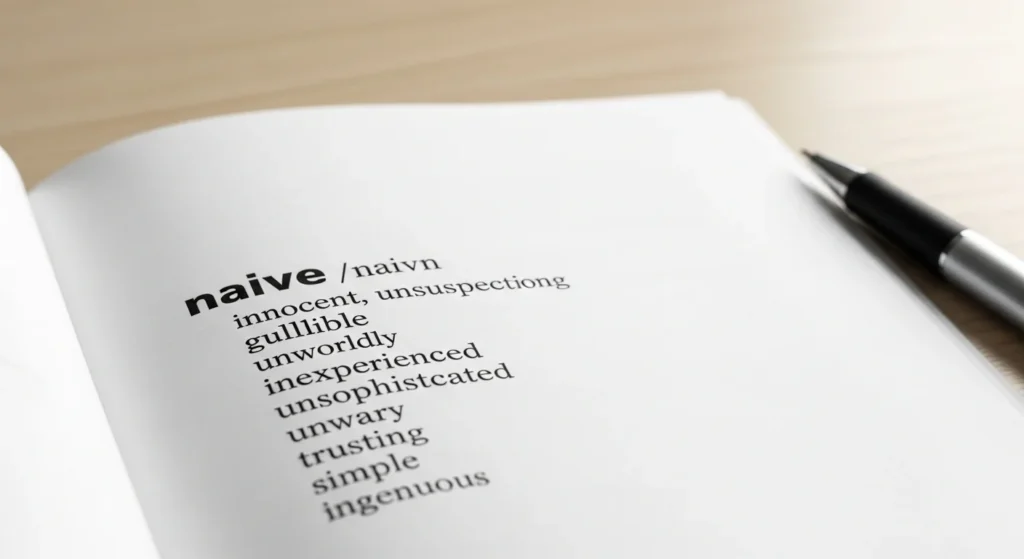
Naive means simple, innocent, and lacking experience. Imagine a young student who trusts everyone on the first day of college. He believes every story he hears. He does not think people may trick him. We may call him naive.
The word naive is common in daily English. People use it in conversations, news, books, and social media. It often describes someone who trusts too easily.
Learning synonyms of naive is very important. English learners need them to speak clearly. Writers and bloggers need them to avoid repetition. Strong vocabulary makes writing rich and natural.
This article explains the meaning of naive and its synonyms with examples. It also covers grammar, pronunciation, word history, word formation, antonyms, and semantic categories in simple language.
Meaning of Naive
Definition
Naive (adjective):
A person who lacks experience, judgment, or awareness about the world.
Examples
She was naive and believed the fake email.
It is naive to think that success comes without effort.
Connotative Meaning
(Connotation means the emotional feeling or tone connected to a word.)
- Positive tone: innocent, pure, simple-hearted
- Negative tone: foolish, gullible, immature
- Neutral tone: inexperienced, unaware
Etymology
- From French naïf, meaning “natural” or “innate.”
- From Latin nativus, meaning “born” or “native.”
Short History
- Old English (450–1100): The word did not exist in this form.
- Middle English (1100–1500): French influence entered English.
- Modern English (1500–Present): The word naive appeared and became common in the 17th century.
Pronunciation (US & UK – IPA)
US: /naɪˈiːv/
UK: /naɪˈiːv/
Syllables
na-ive
Affixation Pattern of Naive
- Root: nat (birth, natural)
- Prefix: None
- Suffix: None (borrowed form)
Word Formation
- Naively (Adverb)
- Naivety / Naivete (Noun)
- Naiveness (Noun)
A List of Synonyms for Naive
1. Innocent (adjective) — US /ˈɪnəsənt/ | UK /ˈɪnəsənt/
Meaning: Not guilty or lacking worldly experience.
Examples:
She gave an innocent smile.
He is innocent about city life.
2. Gullible (adjective) — US /ˈɡʌləbəl/ | UK /ˈɡʌləbəl/
Meaning: Easily tricked or deceived.
Examples:
He is gullible and believes rumors.
Scammers target gullible people.
3. Trusting (adjective) — US /ˈtrʌstɪŋ/ | UK /ˈtrʌstɪŋ/
Meaning: Ready to believe others.
Examples:
She is too trusting.
Trusting children need guidance.
4. Unsuspecting (adjective) — US /ˌʌnsəˈspɛktɪŋ/ | UK /ˌʌnsəˈspɛktɪŋ/
Meaning: Not aware of danger.
Examples:
The unsuspecting man opened the door.
She was unsuspecting of the plan.
5. Simple (adjective) — US /ˈsɪmpəl/ | UK /ˈsɪmpəl/
Meaning: Not complex or not clever about tricks.
Examples:
He has a simple heart.
Her simple nature is sweet.
6. Childlike (adjective) — US /ˈtʃaɪldˌlaɪk/ | UK /ˈtʃaɪldlaɪk/
Meaning: Like a child in innocence.
Examples:
She has childlike joy.
His childlike trust is pure.
7. Unworldly (adjective) — US /ʌnˈwɝːldli/ | UK /ʌnˈwɜːldli/
Meaning: Not experienced in real life matters.
Examples:
He seems unworldly.
Her unworldly views surprise others.
8. Artless (adjective) — US /ˈɑːrtləs/ | UK /ˈɑːtləs/
Meaning: Honest and without trickery.
Examples:
She gave an artless reply.
His artless behavior is rare.
9. Credulous (adjective) — US /ˈkrɛdjələs/ | UK /ˈkrɛdjʊləs/
Meaning: Too ready to believe things.
Examples:
Do not be credulous.
Credulous people believe fake news.
10. Green (adjective) — US /ɡriːn/ | UK /ɡriːn/
Meaning: Inexperienced or new.
Examples:
He is green in business.
The green worker made mistakes.
11. Uninformed (adjective) — US /ˌʌnɪnˈfɔːrmd/ | UK /ˌʌnɪnˈfɔːmd/
Meaning: Lacking knowledge.
Examples:
She is uninformed about politics.
Uninformed choices cause problems.
12. Ignorant (adjective) — US /ˈɪɡnərənt/ | UK /ˈɪɡnərənt/
Meaning: Without knowledge.
Examples:
He is ignorant of the rules.
Ignorant remarks hurt people.
13. Foolish (adjective) — US /ˈfuːlɪʃ/ | UK /ˈfuːlɪʃ/
Meaning: Not wise.
Examples:
It was foolish to lie.
Do not make foolish choices.
14. Impractical (adjective) — US /ɪmˈpræktɪkəl/ | UK /ɪmˈpræktɪkəl/
Meaning: Not realistic.
Examples:
His plan is impractical.
Impractical ideas fail.
15. Idealistic (adjective) — US /aɪˌdiːəˈlɪstɪk/ | UK /aɪˌdɪəˈlɪstɪk/
Meaning: Guided by high ideals, not reality.
Examples:
She is idealistic about love.
Idealistic youth dream big.
16. Wide-eyed (adjective) — US /ˌwaɪdˈaɪd/ | UK /ˌwaɪdˈaɪd/
Meaning: Full of surprise and innocence.
Examples:
The wide-eyed child watched.
He looked wide-eyed at the city.
17. Pure (adjective) — US /pjʊr/ | UK /pjʊə/
Meaning: Clean in heart and mind.
Examples:
She has a pure soul.
Pure trust is rare.
18. Honest (adjective) — US /ˈɑːnɪst/ | UK /ˈɒnɪst/
Meaning: Truthful and sincere.
Examples:
He is honest and open.
Honest people speak clearly.
19. Frank (adjective) — US /fræŋk/ | UK /fræŋk/
Meaning: Direct and open.
Examples:
She gave a frank answer.
Be frank with me.
20. Candid (adjective) — US /ˈkændɪd/ | UK /ˈkændɪd/
Meaning: Truthful and open.
Examples:
He made a candid remark.
Candid talks build trust.
21. Open (adjective) — US /ˈoʊpən/ | UK /ˈəʊpən/
Meaning: Willing to share feelings.
Examples:
She is open with friends.
Open minds learn fast.
22. Transparent (adjective) — US /trænsˈpærənt/ | UK /trænsˈpærənt/
Meaning: Easy to see through; honest.
Examples:
His motives were transparent.
Transparent leaders gain trust.
23. Unsophisticated (adjective) — US /ˌʌnsəˈfɪstɪˌkeɪtɪd/ | UK /ˌʌnsəˈfɪstɪkeɪtɪd/
Meaning: Not complex or worldly.
Examples:
She has unsophisticated tastes.
Unsophisticated views seem simple.
24. Rustic (adjective) — US /ˈrʌstɪk/ | UK /ˈrʌstɪk/
Meaning: Simple and country-like.
Examples:
He has rustic manners.
Rustic charm attracts tourists.
25. Untutored (adjective) — US /ʌnˈtuːtərd/ | UK /ʌnˈtjuːtəd/
Meaning: Not taught or trained.
Examples:
She has untutored talent.
Untutored youth need support.
26. Callow (adjective) — US /ˈkæloʊ/ | UK /ˈkæləʊ/
Meaning: Young and inexperienced.
Examples:
He is a callow writer.
Callow students learn slowly.
27. Ingenuous (adjective) — US /ɪnˈdʒɛnjuəs/ | UK /ɪnˈdʒɛnjuəs/
Meaning: Innocent and sincere.
Examples:
She gave an ingenuous reply.
His ingenuous smile was sweet.
28. Unaware (adjective) — US /ˌʌnəˈwɛr/ | UK /ˌʌnəˈweə/
Meaning: Not knowing something.
Examples:
She was unaware of danger.
He is unaware of the issue.
29. Fresh (adjective) — US /frɛʃ/ | UK /frɛʃ/
Meaning: New and inexperienced.
Examples:
She is fresh in the job.
Fresh workers need training.
30. Unseasoned (adjective) — US /ʌnˈsiːzənd/ | UK /ʌnˈsiːzənd/
Meaning: Not experienced.
Examples:
The unseasoned player tried hard.
Unseasoned staff make errors.
Prototype Meaning
When people hear naive, they usually imagine a young or inexperienced person who trusts others easily. This person believes what people say. He or she does not expect lies or tricks.
Prototype Categorization
Synonyms can be grouped into categories:
- Innocence-based: innocent, pure, ingenuous, childlike
- Easily deceived: gullible, credulous, unsuspecting
- Inexperience-based: green, callow, unseasoned, fresh
- Lack of knowledge: ignorant, uninformed, unaware
- Simple personality: artless, unsophisticated, rustic
Categorization helps writers choose the best word. For example, gullible fits fraud cases, while childlike fits positive innocence.
Antonyms of Naive
- Wise (Adjective): Having knowledge and good judgment
- Experienced (Adjective): Having practical knowledge
- Clever (Adjective): Quick to understand
- Shrewd (Adjective): Good at judging people
- Sophisticated (Adjective): Having worldly experience
Read more about 30 Synonyms of Analytics with Examples and Explanation for 2026
Short Questions and Answers
- What does naive mean?
It means lacking experience or worldly knowledge. - When should naive be used?
Use it when describing someone who trusts easily or lacks experience. - Is naive positive or negative?
It can be positive for innocence or negative for foolish trust. - How is it different from similar words?
Naive focuses on lack of experience, while gullible focuses on being easily tricked.
CONCLUSION
Learning the word naive and its synonyms improves vocabulary. It strengthens writing and speaking skills. It helps avoid repetition in essays and blogs. Strong vocabulary builds English confidence.
When you know many synonyms, you can express ideas clearly. You can choose words based on tone and context.
Practice new words daily. Read books. Write sentences. Speak confidently. Vocabulary growth is a lifelong journey.

I am a linguist with 17 years of experience in English language teaching, including postgraduate-level instruction. My expertise includes English grammar, and I contribute as a content and blog writer, producing scholarly and educational language resources.