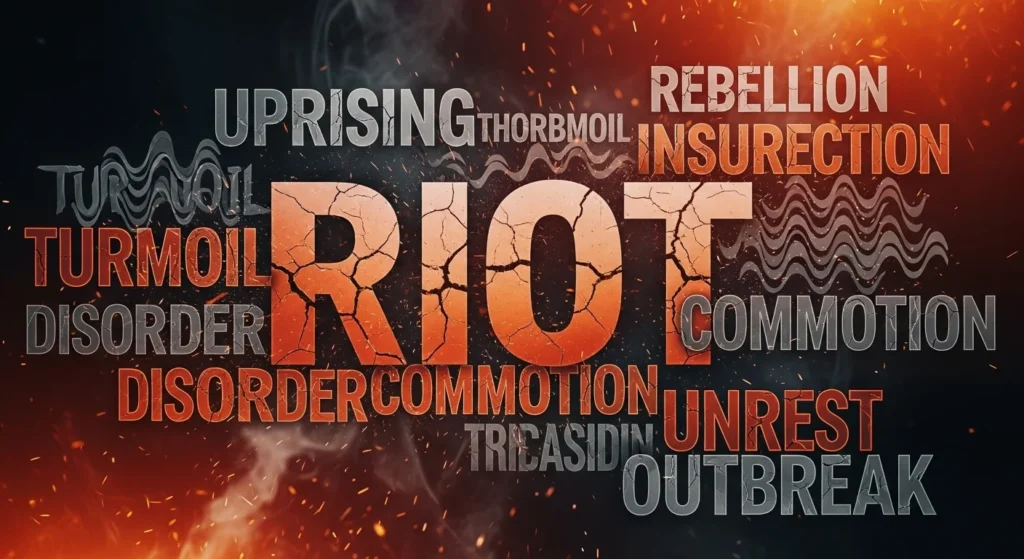
The word riot describes a situation where a large group of people act in a loud, violent, or uncontrolled way. Imagine a football match where fans become angry after a bad decision. Some people begin shouting, pushing, and breaking things. Soon the crowd loses control. This chaotic event becomes a riot.
The word is commonly used in news, history, and everyday conversation to describe public disorder or wild behavior. Writers also use it in a lighter way, such as saying a comedy show was “a riot,” meaning it was very funny.
Learning synonyms for riot helps English learners and writers express ideas more clearly. It also helps avoid repeating the same word.
This article explains the meaning of riot and explores its synonyms with examples, pronunciation, grammar, history, and semantic categories to build strong vocabulary skills.
Meaning of Riot
Definition
Riot (Noun / Verb):
A violent public disturbance where a crowd causes noise, disorder, or destruction.
Examples
- The protest turned into a riot after the crowd became angry.
- The comedian’s performance was a riot, and everyone laughed.
Connotative Meaning
(Connotation: the emotional feeling or association a word carries beyond its basic meaning.)
- Positive tone: Sometimes used to describe something very funny or exciting.
- Negative tone: Most commonly refers to violence, chaos, and destruction.
- Neutral tone: Used in historical or factual descriptions of public disorder.
Etymology
- From Old French riote, meaning dispute, quarrel, or uproar.
- Entered English in the 13th century.
Short History
- Old English (450–1100): The exact word was not used, but words for conflict and disorder existed.
- Middle English (1100–1500): The term riot entered English through French influence.
- Modern English (1500–Present): The word became widely used for public disturbances and disorderly crowds.
Pronunciation (US & UK – IPA)
US: /ˈraɪət/
UK: /ˈraɪət/
Syllables
ri-ot
Affixation Pattern of Riot
- Root: riot
- Prefix: none
- Suffix: none
Word Formation
- Riot (noun) – public disorder
- Riot (verb) – to act violently in a crowd
- Rioter (noun) – a person who takes part in a riot
- Rioting (noun/verb) – the act of causing a riot
- Riotous (adjective) – noisy, wild, or violent
A List of Synonyms for Riot
1. Uproar (Noun)
US /ˈʌpˌrɔr/ | UK /ˈʌprɔː/
Meaning: A loud and angry disturbance by many people.
Examples:
- The decision caused an uproar in the crowd.
- Fans created an uproar after the referee’s call.
2. Disturbance (Noun)
US /dɪˈstɝːbəns/ | UK /dɪˈstɜːbəns/
Meaning: A noisy public event that interrupts peace.
Examples:
- Police responded to a disturbance downtown.
- The loud protest caused a disturbance.
3. Chaos (Noun)
US /ˈkeɪɑːs/ | UK /ˈkeɪɒs/
Meaning: A state of complete confusion and disorder.
Examples:
- The streets fell into chaos.
- The sudden fight created chaos.
4. Turmoil (Noun)
US /ˈtɝːmɔɪl/ | UK /ˈtɜːmɔɪl/
Meaning: Great disturbance or confusion.
Examples:
- The city was in turmoil.
- Political protests caused turmoil.
5. Commotion (Noun)
US /kəˈmoʊʃən/ | UK /kəˈməʊʃən/
Meaning: Sudden noisy excitement or confusion.
Examples:
- We heard a commotion outside.
- The fight caused a commotion.
6. Disorder (Noun)
US /dɪsˈɔːrdər/ | UK /dɪsˈɔːdə/
Meaning: Lack of order or control.
Examples:
- The protest turned into disorder.
- Police tried to stop the disorder.
7. Rampage (Noun)
US /ˈræmpeɪdʒ/ | UK /ˈræmpeɪdʒ/
Meaning: Violent and uncontrolled behavior.
Examples:
- The crowd went on a rampage.
- Angry fans began a rampage.
8. Mayhem (Noun)
US /ˈmeɪhem/ | UK /ˈmeɪhem/
Meaning: Violent chaos and destruction.
Examples:
- The streets were full of mayhem.
- The fight created mayhem.
9. Revolt (Noun)
US /rɪˈvoʊlt/ | UK /rɪˈvəʊlt/
Meaning: A rebellion against authority.
Examples:
- The people started a revolt.
- The soldiers joined the revolt.
10. Rebellion (Noun)
US /rɪˈbeljən/ | UK /rɪˈbeljən/
Meaning: Organized resistance against power.
Examples:
- The group led a rebellion.
- History records many rebellions.
11. Insurrection (Noun)
US /ˌɪnsəˈrekʃən/ | UK /ˌɪnsəˈrekʃən/
Meaning: A violent uprising against authority.
Examples:
- The army stopped the insurrection.
- The insurrection shocked the nation.
12. Protest (Noun)
US /ˈproʊtest/ | UK /ˈprəʊtest/
Meaning: A public expression of objection.
Examples:
- The protest filled the streets.
- Students organized a protest.
13. Clash (Noun)
US /klæʃ/ | UK /klæʃ/
Meaning: A violent fight between groups.
Examples:
- Police had a clash with protesters.
- The rival groups had a clash.
14. Frenzy (Noun)
US /ˈfrenzi/ | UK /ˈfrenzi/
Meaning: Wild and uncontrolled excitement.
Examples:
- The crowd entered a frenzy.
- Fans reacted in frenzy.
15. Outburst (Noun)
US /ˈaʊtbɝːst/ | UK /ˈaʊtbɜːst/
Meaning: A sudden release of anger or noise.
Examples:
- His outburst shocked everyone.
- The crowd had an angry outburst.
16. Fracas (Noun)
US /ˈfreɪkəs/ | UK /ˈfrækɑː/
Meaning: A noisy fight or argument.
Examples:
- A fracas started in the bar.
- The game ended in a fracas.
17. Brawl (Noun)
US /brɔːl/ | UK /brɔːl/
Meaning: A rough fight among many people.
Examples:
- A brawl broke out after the match.
- The bar fight became a brawl.
18. Tumult (Noun)
US /ˈtuːmʌlt/ | UK /ˈtjuːmʌlt/
Meaning: Loud confusion and excitement.
Examples:
- The hall filled with tumult.
- The speech caused tumult.
19. Pandemonium (Noun)
US /ˌpændəˈmoʊniəm/ | UK /ˌpændəˈməʊniəm/
Meaning: Wild and noisy chaos.
Examples:
- The stadium erupted in pandemonium.
- The surprise caused pandemonium.
20. Disorderliness (Noun)
US /dɪsˈɔːrdərlinəs/ | UK /dɪsˈɔːdəlinəs/
Meaning: Lack of control or order.
Examples:
- The crowd showed disorderliness.
- Police stopped the disorderliness.
21. Upheaval (Noun)
US /ʌpˈhiːvəl/ | UK /ʌpˈhiːvəl/
Meaning: A big sudden change or disturbance.
Examples:
- The protest caused political upheaval.
- The event led to social upheaval.
22. Distress (Noun)
US /dɪˈstres/ | UK /dɪˈstres/
Meaning: Trouble or suffering in a group.
Examples:
- The event caused public distress.
- The violence led to great distress.
23. Revolting Crowd (Noun Phrase)
US /rɪˈvoʊltɪŋ kraʊd/ | UK /rɪˈvəʊltɪŋ kraʊd/
Meaning: A group rising against authority.
Examples:
- The revolting crowd marched loudly.
- Police tried to calm the revolting crowd.
24. Violence (Noun)
US /ˈvaɪələns/ | UK /ˈvaɪələns/
Meaning: Physical force causing harm.
Examples:
- The protest turned into violence.
- Police tried to stop the violence.
25. Riotous Behavior (Noun Phrase)
US /ˈraɪətəs bɪˈheɪvjər/ | UK /ˈraɪətəs bɪˈheɪvjə/
Meaning: Wild and noisy conduct.
Examples:
- The fans showed riotous behavior.
- Police controlled the riotous behavior.
26. Disorderly Crowd (Noun Phrase)
US /dɪsˈɔːrdərli kraʊd/ | UK /dɪsˈɔːdəli kraʊd/
Meaning: A crowd acting without control.
Examples:
- The disorderly crowd blocked the road.
- Police managed the disorderly crowd.
27. Uprising (Noun)
US /ˈʌpraɪzɪŋ/ | UK /ˈʌpraɪzɪŋ/
Meaning: A public rebellion.
Examples:
- The city saw an uprising.
- The uprising shocked the government.
28. Demonstration (Noun)
US /ˌdemənˈstreɪʃən/ | UK /ˌdemənˈstreɪʃən/
Meaning: A public protest by many people.
Examples:
- Students held a demonstration.
- The demonstration filled the square.
29. Hooliganism (Noun)
US /ˈhuːlɪɡənɪzəm/ | UK /ˈhuːlɪɡənɪzəm/
Meaning: Violent or rude public behavior.
Examples:
- The game ended with hooliganism.
- Police warned against hooliganism.
30. Public Disorder (Noun Phrase)
US /ˈpʌblɪk dɪsˈɔːrdər/ | UK /ˈpʌblɪk dɪsˈɔːdə/
Meaning: Lack of peace in public places.
Examples:
- The police stopped the public disorder.
- The event caused public disorder.
Prototype Meaning
The prototype meaning of riot is a violent public disturbance caused by a large crowd. People usually imagine angry protesters, shouting crowds, broken windows, and police trying to restore order.
Prototype Categorization
- Violent crowd behavior: brawl, rampage, mayhem
- Public disorder: chaos, uproar, turmoil
- Political resistance: revolt, rebellion, uprising
- Sudden emotional reaction: frenzy, outburst, pandemonium
Grouping synonyms helps writers choose the best word for the exact situation and tone.
Antonyms of Riot
- Peace (Noun): a calm and quiet state without violence
- Order (Noun): a situation where everything is controlled and organized
- Harmony (Noun): peaceful agreement among people
- Calm (Noun/Adjective): absence of noise or disturbance
Short Questions and Answers
- What does riot mean?
A riot is a violent and noisy disturbance caused by a large crowd. - When should riot be used?
Use it when describing public disorder, angry crowds, or chaotic group behavior. - Is riot positive or negative?
It is usually negative, but sometimes used humorously to mean something very funny. - How is it different from similar words?
Riot usually involves crowds and violence, while words like chaos or uproar may not involve physical damage.
Conclusion
Learning the word riot and its synonyms helps expand your English vocabulary. Words like uproar, chaos, turmoil, and rampage allow you to describe different types of disorder and excitement with precision. Using varied vocabulary improves both writing and speaking skills.
For writers, synonyms help avoid repetition and make content more engaging. For learners, they improve understanding of news, books, and conversations. Practicing new words every day builds confidence and fluency in English. Over time, your vocabulary becomes richer and more expressive.

I am a linguist with 17 years of experience in English language teaching, including postgraduate-level instruction. My expertise includes English grammar, and I contribute as a content and blog writer, producing scholarly and educational language resources.