
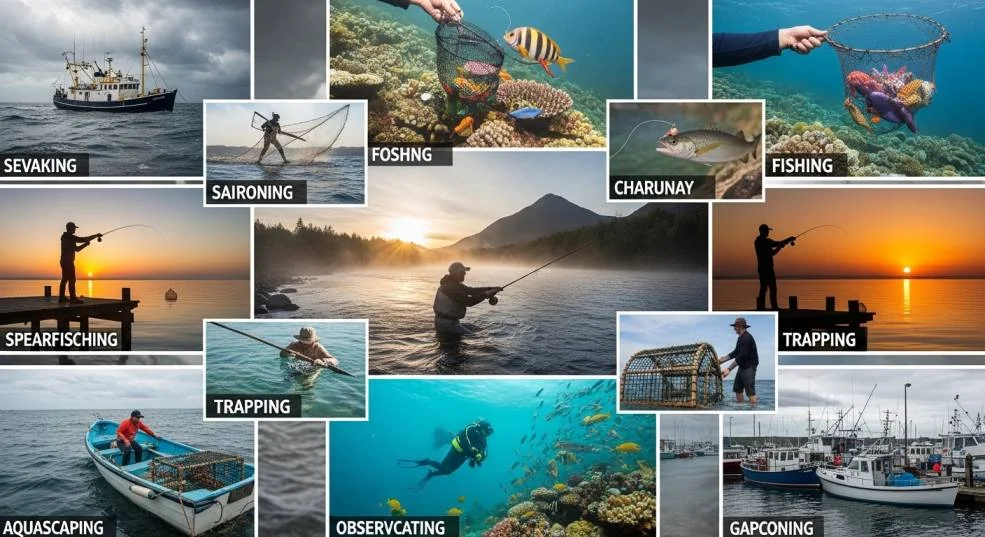
Fishing is a common word in daily English. It means catching fish from water. Imagine a man sitting by a river early in the morning. He throws a line into the water and waits. This simple act is called fishing. Many people use this word when talking about hobbies, food, or nature.
Learning synonyms of fishing is very useful. It helps English learners speak more clearly and write better. Content writers also avoid repeating the same word again and again.
In this article, you will learn the meaning of fishing and its synonyms with examples, grammar, pronunciation, and history.
You will also see how these words are used in real sentences and grouped by meaning.
Meaning of Fishing
Fishing (noun/verb):
Fishing means the activity of catching fish from water using tools like nets, rods, or hands.
Examples:
- He enjoys fishing on weekends.
- They are fishing in the lake today.
Connotative Meaning
(Connotation means the emotional feeling a word carries.)
- Positive tone: relaxing, peaceful, fun activity
- Negative tone: wasting time, searching without success
- Neutral tone: simple act of catching fish
Etymology
- Comes from Old English fiscian meaning “to catch fish”
History:
- Old English (450–1100): Used as fiscian
- Middle English (1100–1500): Became fisshen
- Modern English (1500–Present): Became fishing
Pronunciation (US & UK – IPA)
- US: /ˈfɪʃɪŋ/
- UK: /ˈfɪʃɪŋ/
Syllables
fish-ing
Affixation Pattern of Fishing
- Root: fish
- Prefix: none
- Suffix: -ing
Word Formation:
- fish (noun/verb)
- fishes (noun plural/verb)
- fishing (noun/verb)
- fisherman (noun)
- fishery (noun)
A List of 30 Synonyms for Fishing
1. Angling (noun)
US /ˈæŋɡlɪŋ/ | UK /ˈæŋɡlɪŋ/
Meaning: Catching fish with a hook and line
Examples:
- He loves angling in quiet rivers.
- Angling requires patience.
2. Catching fish (verb phrase)
US /ˈkætʃɪŋ fɪʃ/ | UK /ˈkætʃɪŋ fɪʃ/
Meaning: The act of taking fish from water
Examples:
- They are catching fish for dinner.
- Catching fish is his hobby.
3. Trawling (noun/verb)
US /ˈtrɔːlɪŋ/ | UK /ˈtrɔːlɪŋ/
Meaning: Fishing using a large net
Examples:
- Boats are trawling in the sea.
- Trawling catches many fish at once.
4. Netting (noun/verb)
US /ˈnɛtɪŋ/ | UK /ˈnɛtɪŋ/
Meaning: Catching fish using nets
Examples:
- Netting is common in coastal areas.
- They are netting fish today.
5. Spearfishing (noun)
US /ˈspɪrfɪʃɪŋ/ | UK /ˈspɪəfɪʃɪŋ/
Meaning: Catching fish using a spear
Examples:
- Spearfishing needs skill.
- He enjoys spearfishing underwater.
6. Fly fishing (noun)
US /ˈflaɪ fɪʃɪŋ/ | UK /ˈflaɪ fɪʃɪŋ/
Meaning: Fishing with artificial flies
Examples:
- Fly fishing is popular in rivers.
- She learned fly fishing last year.
7. Casting (noun/verb)
US /ˈkæstɪŋ/ | UK /ˈkɑːstɪŋ/
Meaning: Throwing a fishing line
Examples:
- He is casting his line far.
- Casting takes practice.
8. Hooking (verb)
US /ˈhʊkɪŋ/ | UK /ˈhʊkɪŋ/
Meaning: Catching fish with a hook
Examples:
- She is hooking fish quickly.
- Hooking requires timing.
9. Harvesting fish (verb phrase)
US /ˈhɑːrvɪstɪŋ/ | UK /ˈhɑːvɪstɪŋ/
Meaning: Collecting fish as a resource
Examples:
- They are harvesting fish from ponds.
- Harvesting fish supports food supply.
10. Seining (noun)
US /ˈseɪnɪŋ/ | UK /ˈseɪnɪŋ/
Meaning: Using a seine net
Examples:
- Seining is done in shallow water.
- They practice seining near shore.
11. Dredging (noun/verb)
US /ˈdrɛdʒɪŋ/ | UK /ˈdrɛdʒɪŋ/
Meaning: Collecting fish from the bottom
Examples:
- Dredging is used for shellfish.
- Boats are dredging today.
12. Gathering seafood (verb phrase)
US /ˈɡæðərɪŋ/ | UK /ˈɡæðərɪŋ/
Meaning: Collecting fish and sea animals
Examples:
- They are gathering seafood.
- Gathering seafood is traditional.
13. Rod fishing (noun)
US /ˈrɑːd fɪʃɪŋ/ | UK /ˈrɒd fɪʃɪŋ/
Meaning: Fishing with a rod
Examples:
- Rod fishing is simple.
- He prefers rod fishing.
14. Line fishing (noun)
US /ˈlaɪn fɪʃɪŋ/ | UK /ˈlaɪn fɪʃɪŋ/
Meaning: Fishing with a line
Examples:
- Line fishing is common.
- They use line fishing methods.
15. Commercial fishing (noun)
US /kəˈmɜːrʃəl/ | UK /kəˈmɜːʃəl/
Meaning: Fishing for business
Examples:
- Commercial fishing feeds many people.
- It is a big industry.
16. Recreational fishing (noun)
US /ˌrɛkriˈeɪʃənəl/ | UK /ˌrɛkriˈeɪʃənəl/
Meaning: Fishing for fun
Examples:
- Recreational fishing is relaxing.
- Families enjoy it.
17. Ice fishing (noun)
US /aɪs/ | UK /aɪs/
Meaning: Fishing through ice
Examples:
- Ice fishing happens in winter.
- It is popular in cold regions.
18. Deep-sea fishing (noun)
US /ˈdiːp siː/ | UK /ˈdiːp siː/
Meaning: Fishing in deep ocean
Examples:
- Deep-sea fishing catches big fish.
- Boats go far offshore.
19. Shore fishing (noun)
US /ʃɔːr/ | UK /ʃɔː/
Meaning: Fishing from land
Examples:
- Shore fishing is easy.
- Beginners like shore fishing.
20. Drift fishing (noun)
US /drɪft/ | UK /drɪft/
Meaning: Fishing while drifting
Examples:
- Drift fishing uses moving boats.
- It covers large areas.
21. Jigging (noun)
US /ˈdʒɪɡɪŋ/ | UK /ˈdʒɪɡɪŋ/
Meaning: Moving bait up and down
Examples:
- Jigging attracts fish.
- He enjoys jigging.
22. Luring (verb)
US /ˈlʊrɪŋ/ | UK /ˈlʊərɪŋ/
Meaning: Attracting fish with bait
Examples:
- Luring fish needs skill.
- Bright bait helps luring.
23. Snagging (verb)
US /ˈsnæɡɪŋ/ | UK /ˈsnæɡɪŋ/
Meaning: Catching fish by hooking
Examples:
- Snagging is not always allowed.
- He tried snagging fish.
24. Harvesting seafood (verb phrase)
US /ˈhɑːrvɪstɪŋ/ | UK /ˈhɑːvɪstɪŋ/
Meaning: Collecting seafood
Examples:
- Harvesting seafood supports markets.
- It is a major activity.
25. Foraging (verb)
US /ˈfɔːrɪdʒɪŋ/ | UK /ˈfɒrɪdʒɪŋ/
Meaning: Searching for food in nature
Examples:
- They are foraging near water.
- Foraging includes fish.
26. Hunting fish (verb phrase)
US /ˈhʌntɪŋ/ | UK /ˈhʌntɪŋ/
Meaning: Actively seeking fish
Examples:
- Birds are hunting fish.
- He enjoys hunting fish.
27. Scooping (verb)
US /ˈskuːpɪŋ/ | UK /ˈskuːpɪŋ/
Meaning: Taking fish with a scoop
Examples:
- Scooping fish is quick.
- Kids enjoy scooping.
28. Trapping fish (verb phrase)
US /ˈtræpɪŋ/ | UK /ˈtræpɪŋ/
Meaning: Catching fish using traps
Examples:
- Trapping fish is ancient.
- Villagers use traps.
29. Hand fishing (noun)
US /hænd/ | UK /hænd/
Meaning: Catching fish by hand
Examples:
- Hand fishing is risky.
- It needs courage.
30. Aquatic harvesting (noun)
US /əˈkwætɪk/ | UK /əˈkwɒtɪk/
Meaning: Collecting water resources
Examples:
- Aquatic harvesting includes fish.
- It supports economy.
Prototype Meaning
Fishing usually means a person sitting near water with a rod and line, waiting quietly to catch fish. It shows patience, calmness, and connection with nature.
Prototype Categorization
- Methods: angling, trawling, netting, jigging
- Tools-based: rod fishing, line fishing, spearfishing
- Purpose-based: commercial fishing, recreational fishing
- Location-based: deep-sea fishing, shore fishing, ice fishing
These categories help writers choose the right word for the exact situation.
Antonyms of Fishing
- Ignoring (verb): not trying to catch
- Releasing (verb): letting fish go
- Avoiding (verb): staying away from activity
- Protecting (verb): saving fish
Short Questions and Answers
- What does fishing mean?
Fishing means catching fish from water. - When should fishing be used?
Use it when talking about catching fish as a hobby or job. - Is fishing positive or negative?
It can be both, depending on context. - How is it different from similar words?
Fishing is general, while words like angling or trawling are specific methods.
Conclusion
Learning the word fishing and its synonyms helps improve your English. It makes your writing more clear and interesting. You can avoid repeating the same word again and again. It also helps you speak with confidence. By learning different meanings, tones, and uses, you become a better communicator. Try to practice new words daily. Use them in sentences and real life. Over time, your vocabulary will grow strong and natural.

I am a linguist with 17 years of experience in English language teaching, including postgraduate-level instruction. My expertise includes English grammar, and I contribute as a content and blog writer, producing scholarly and educational language resources.