Winter is a season of the year known for cold weather, shorter days, and freezing temperatures. Imagine waking up on a winter morning, seeing frost on the windows, wearing a warm coat, and drinking hot tea near a fire. The word “winter” naturally describes this cold and beautiful time of the year.
The word winter is commonly used in daily conversations, weather reports, stories, poems, and articles. Learning synonyms of winter helps English learners and content writers express ideas in more creative and accurate ways. Different words can show different feelings, climates, and writing styles.
This article explains the meaning of winter and explores its synonyms with examples, grammar details, pronunciation, history, and semantic categories to improve vocabulary skills.
Meaning of Winter
Definition
Winter (noun):
Winter is the coldest season of the year, usually occurring between autumn and spring.
Examples
- Winter brings cold winds and snowfall in many countries.
- I enjoy reading books during the quiet winter evenings.
Connotative Meaning
Connotation (the emotional or cultural feeling connected with a word beyond its basic meaning):
- Positive tone: Winter can suggest beauty, holidays, comfort, and peaceful moments.
- Negative tone: Winter can suggest loneliness, harsh cold, and difficulty.
- Neutral tone: Winter simply describes a season with cold weather.
Etymology
- Source language: Old English
- Original meaning: “Winter” came from the Old English word wintr, meaning the cold season or period of the year.
Short History of Winter
Old English (450–1100):
The word appeared as wintr and described the cold season.
Middle English (1100–1500):
The spelling changed into forms like winter while keeping the same meaning.
Modern English (1500–Present):
Winter became a common word used in weather, literature, science, and everyday speech.
Pronunciation (US & UK – IPA)
US: /ˈwɪn.tɚ/
UK: /ˈwɪn.tə/
Syllables
win-ter
Affixation Pattern of Winter
Root:
- wintr (Old English root meaning cold season)
Prefix:
- None
Suffix:
- None
Word Formation
- Winter (noun): the season
- Wintery/Wintery (adjective): related to winter
- Winterize (verb): prepare something for winter conditions
- Wintering (noun/verb): spending or surviving the winter season
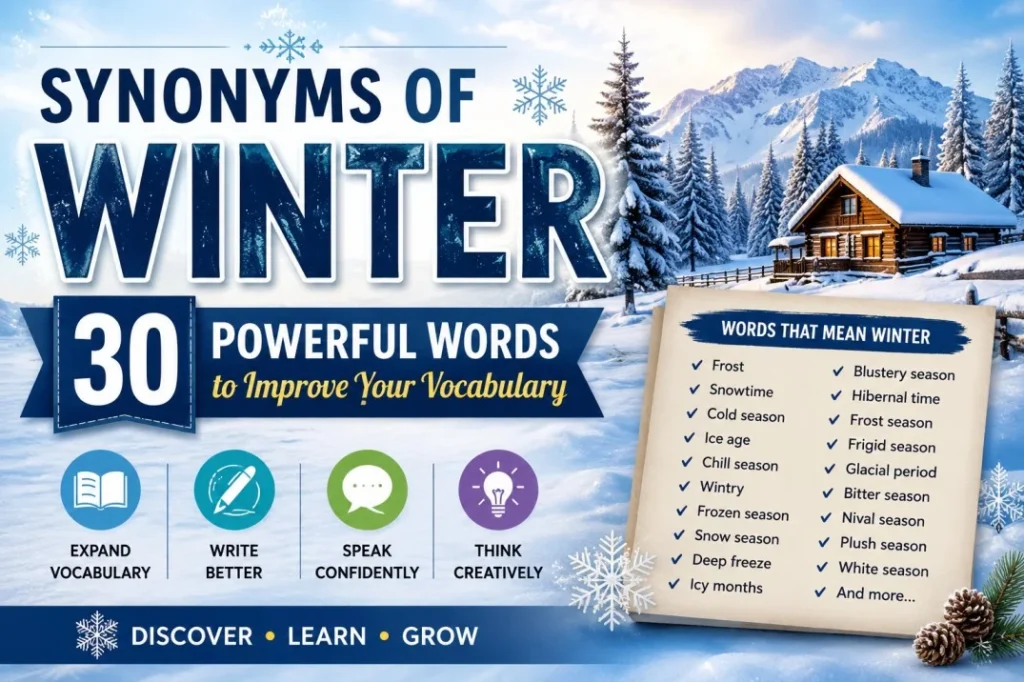
A List of 30 Synonyms for Winter
1. Cold Season (noun)
US: /koʊld ˈsiːzən/
UK: /kəʊld ˈsiːzən/
Meaning: A period of the year with low temperatures.
Examples:
- The cold season begins in December.
- Farmers prepare before the cold season arrives.
2. Frost (noun)
US: /frɔːst/
UK: /frɒst/
Meaning: A thin layer of ice formed in cold weather.
Examples:
- Frost covered the grass in the morning.
- The frost damaged some plants.
3. Freeze (noun)
US: /friːz/
UK: /friːz/
Meaning: A time when temperatures fall below freezing.
Examples:
- The freeze destroyed the crops.
- A sudden freeze surprised everyone.
4. Chill (noun)
US: /tʃɪl/
UK: /tʃɪl/
Meaning: A feeling or period of coldness.
Examples:
- A winter chill filled the air.
- The evening chill made me wear a jacket.
5. Snowtime (noun)
US: /ˈsnoʊtaɪm/
UK: /ˈsnəʊtaɪm/
Meaning: A time when snowfall happens.
Examples:
- Snowtime is exciting for children.
- The village becomes beautiful during snowtime.
6. Wintertime (noun)
US: /ˈwɪntərtaɪm/
UK: /ˈwɪntətaɪm/
Meaning: The period during winter.
Examples:
- Wintertime nights are longer.
- Many animals rest during wintertime.
7. Arctic Season (noun)
US: /ˈɑːrktɪk ˈsiːzən/
UK: /ˈɑːktɪk ˈsiːzən/
Meaning: A very cold seasonal period.
Examples:
- The region experiences an arctic season.
- Arctic seasons can be extremely harsh.
8. Cold Spell (noun)
US: /koʊld spel/
UK: /kəʊld spel/
Meaning: A short period of unusually cold weather.
Examples:
- A cold spell hit the city.
- The cold spell lasted several days.
9. Frosty Period (noun)
US: /ˈfrɔːsti ˈpɪriəd/
UK: /ˈfrɒsti ˈpɪəriəd/
Meaning: A time with frost and cold temperatures.
Examples:
- The frosty period affected travel.
- Plants struggle during a frosty period.
10. Snow Season (noun)
US: /snoʊ ˈsiːzən/
UK: /snəʊ ˈsiːzən/
Meaning: The season when snow commonly appears.
Examples:
- The snow season attracts tourists.
- Skiers enjoy the snow season.
11. Icy Season (noun)
US: /ˈaɪsi ˈsiːzən/
UK: /ˈaɪsi ˈsiːzən/
Meaning: A time marked by ice and freezing conditions.
Examples:
- Roads become dangerous in the icy season.
- The icy season requires careful driving.
12. Polar Season (noun)
US: /ˈpoʊlər ˈsiːzən/
UK: /ˈpəʊlə ˈsiːzən/
Meaning: A season connected with extreme cold regions.
Examples:
- Polar seasons have unusual weather patterns.
- Scientists study polar seasons.
13. Hibernal (adjective)
US: /haɪˈbɜːrnəl/
UK: /haɪˈbɜːnəl/
Meaning: Related to winter.
Examples:
- The forest has a hibernal beauty.
- Hibernal weather can be severe.
14. Wintry (adjective)
US: /ˈwɪntri/
UK: /ˈwɪntri/
Meaning: Showing the qualities of winter.
Examples:
- The landscape looked wintry.
- A wintry wind blew outside.
15. Frozen (adjective)
US: /ˈfroʊzən/
UK: /ˈfrəʊzən/
Meaning: Turned into ice because of cold.
Examples:
- The lake was frozen.
- Frozen roads can be unsafe.
16. Snowy (adjective)
US: /ˈsnoʊi/
UK: /ˈsnəʊi/
Meaning: Covered with snow.
Examples:
- The mountains looked snowy.
- We walked through a snowy path.
17. Icy (adjective)
US: /ˈaɪsi/
UK: /ˈaɪsi/
Meaning: Covered with ice or extremely cold.
Examples:
- The icy road was slippery.
- An icy wind passed through the town.
18. Frigid (adjective)
US: /ˈfrɪdʒɪd/
UK: /ˈfrɪdʒɪd/
Meaning: Extremely cold.
Examples:
- The frigid air hurt my face.
- The mountain has frigid temperatures.
19. Chilly (adjective)
US: /ˈtʃɪli/
UK: /ˈtʃɪli/
Meaning: Slightly cold.
Examples:
- It was a chilly morning.
- The chilly weather continued.
20. Freezing (adjective)
US: /ˈfriːzɪŋ/
UK: /ˈfriːzɪŋ/
Meaning: Extremely cold.
Examples:
- The freezing weather stopped outdoor activities.
- My hands became freezing cold.
21. Glacial (adjective)
US: /ˈɡleɪʃəl/
UK: /ˈɡleɪʃəl/
Meaning: Very cold like ice or glaciers.
Examples:
- Glacial winds covered the valley.
- The water was glacial cold.
22. Wintriness (noun)
US: /ˈwɪntrinəs/
UK: /ˈwɪntrinəs/
Meaning: The quality or feeling of winter.
Examples:
- The painting captures wintriness.
- The air had a sense of wintriness.
23. Ice Age (noun)
US: /aɪs eɪdʒ/
UK: /aɪs eɪdʒ/
Meaning: A long period when Earth has major ice coverage.
Examples:
- Scientists study the Ice Age.
- The Ice Age changed the planet.
24. Wintery Time (noun)
US: /ˈwɪntri taɪm/
UK: /ˈwɪntri taɪm/
Meaning: A period with winter characteristics.
Examples:
- Wintery time brings cold evenings.
- We enjoy wintery time indoors.
25. Coldness (noun)
US: /ˈkoʊldnəs/
UK: /ˈkəʊldnəs/
Meaning: The state of being cold.
Examples:
- The coldness of the air was noticeable.
- Coldness covered the area.
26. Snowfall Period (noun)
US: /ˈsnoʊfɔːl ˈpɪriəd/
UK: /ˈsnəʊfɔːl ˈpɪəriəd/
Meaning: Time when snow falls.
Examples:
- The snowfall period attracts visitors.
- Roads close during heavy snowfall periods.
27. Deep Freeze (noun)
US: /diːp friːz/
UK: /diːp friːz/
Meaning: A very severe cold period.
Examples:
- The deep freeze damaged crops.
- The city prepared for a deep freeze.
28. Cold Wave (noun)
US: /koʊld weɪv/
UK: /kəʊld weɪv/
Meaning: A sudden period of very cold weather.
Examples:
- A cold wave affected the region.
- The cold wave brought snow.
29. Winter Season (noun)
US: /ˈwɪntər ˈsiːzən/
UK: /ˈwɪntə ˈsiːzən/
Meaning: Another way to describe winter.
Examples:
- The winter season is beautiful.
- Many people travel during the winter season.
30. Dormant Season (noun)
US: /ˈdɔːrmənt ˈsiːzən/
UK: /ˈdɔːmənt ˈsiːzən/
Meaning: A period when nature becomes less active.
Examples:
- Trees enter a dormant season.
- Winter is a dormant season for many plants.
Prototype Meaning
The prototype meaning of winter is the coldest season of the year. When people hear the word winter, they usually imagine snow, cold winds, ice, warm clothing, and shorter days.
Prototype Categorization
- Weather-based synonyms: frost, freeze, snowfall, cold wave, deep freeze
- Temperature words: chilly, icy, freezing, frigid, glacial
- Season words: cold season, wintertime, snow season
- Literary words: hibernal, wintry, wintriness
Categorizing synonyms helps writers select words that match the exact mood, situation, and audience.
Antonyms of Winter
- Summer (noun): The hottest season of the year.
- Warm (adjective): Having a comfortable or high temperature.
- Heat (noun): Strong warmth or high temperature.
- Spring (noun): The season after winter with warmer weather.
- Hot (adjective): Having a high temperature.
Short Questions and Answers
- What does winter mean?
Winter means the coldest season of the year. - When should winter be used?
Use winter when talking about the cold season or winter-related events. - Is winter positive or negative?
Winter can be positive or negative depending on the context. - How is winter different from similar words?
Winter describes the whole season, while words like frost or chill describe specific cold conditions.
Conclusion
Learning winter and its synonyms improves vocabulary by helping learners understand different ways to describe cold weather and seasons. These words make writing and speaking more interesting and accurate. Writers can avoid repetition by choosing suitable synonyms based on tone and meaning. English learners can build confidence by practicing new words daily and using them in real conversations. A strong vocabulary helps people communicate ideas clearly and creatively.

I am a linguist with 17 years of experience in English language teaching, including postgraduate-level instruction. My expertise includes English grammar, and I contribute as a content and blog writer, producing scholarly and educational language resources.