
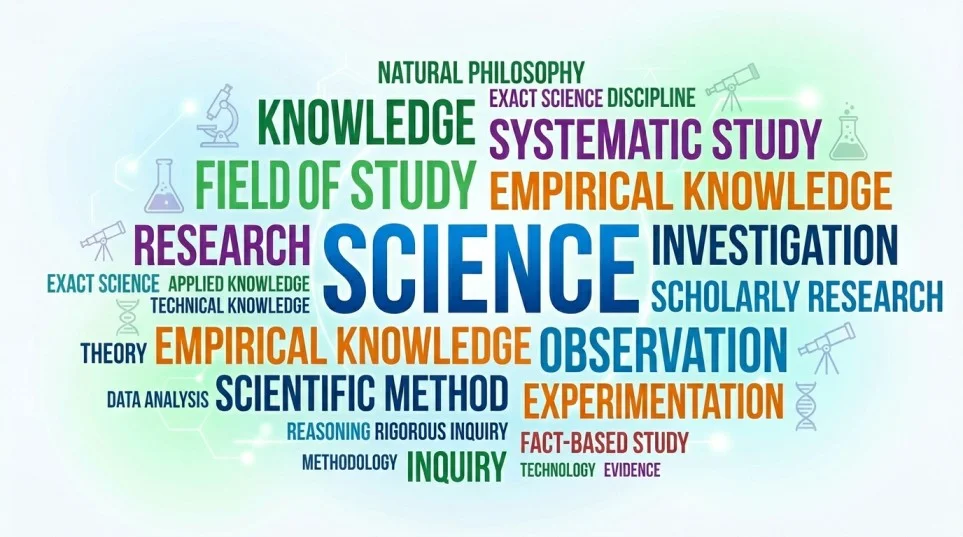
Science is a word we hear every day. Students study science in school. Doctors use science to treat people. Engineers use science to build machines. Even cooking and gardening use science in simple ways. The word “science” is common because it helps people understand the world around them.
Learning synonyms of science is useful for English learners, writers, bloggers, and students. Using different words improves speaking and writing skills. It also helps avoid repeating the same word many times. Strong vocabulary makes communication clearer and more professional.
In this article, you will learn the meaning of science, its pronunciation, history, grammar, and semantic use. You will also discover 30 powerful synonyms of science with meanings and examples. The guide is written in simple English to help beginners learn easily and confidently.
Meaning of Science
Science (Noun):
Science is the study of nature, facts, and the world through observation, testing, and experiments.
Examples
- Science helps people discover new medicines.
- My favorite subject in school is science.
Connotative Meaning
(Connotation means the emotional feeling or idea connected to a word.)
- Positive tone: intelligence, discovery, progress, knowledge
- Negative tone: coldness, complexity, over-analysis
- Neutral tone: academic study, research, facts
Etymology
- The word “science” comes from the Latin word scientia.
- Scientia means “knowledge” or “understanding.”
Short History of the Keyword
- Old English (450–1100): People mostly used words related to knowledge and learning.
- Middle English (1100–1500): The word entered English through Old French and Latin influence.
- Modern English (1500–Present): Science became strongly connected with experiments, research, and technology.
Pronunciation (US & UK – IPA)
- US: /ˈsaɪəns/
- UK: /ˈsaɪəns/
Syllables
sci-ence
Affixation Pattern of Science
- Root: scient
- Prefix: none
- Suffix: -ence
Word Formation of Science
- Scientific (Adjective)
- Scientist (Noun)
- Scientifically (Adverb)
- Scientism (Noun)
- Scientology (Noun)
A List of 30 Synonyms for Science
1. Knowledge (Noun)
US: /ˈnɑːlɪdʒ/ | UK: /ˈnɒlɪdʒ/
Meaning: Information and understanding gained through learning.
Examples:
- She has deep knowledge of biology.
- Knowledge helps people make wise decisions.
2. Learning (Noun)
US: /ˈlɝːnɪŋ/ | UK: /ˈlɜːnɪŋ/
Meaning: The process of gaining education or skills.
Examples:
- Learning science can be exciting.
- Online learning is popular today.
3. Discipline (Noun)
US: /ˈdɪsəplɪn/ | UK: /ˈdɪsɪplɪn/
Meaning: A branch of study or knowledge.
Examples:
- Chemistry is a scientific discipline.
- Each discipline has its own methods.
4. Study (Noun)
US: /ˈstʌdi/ | UK: /ˈstʌdi/
Meaning: Careful examination or research.
Examples:
- The study showed positive results.
- He spends hours in scientific study.
5. Research (Noun)
US: /rɪˈsɝːtʃ/ | UK: /rɪˈsɜːtʃ/
Meaning: Detailed investigation to discover facts.
Examples:
- Medical research saves lives.
- The team conducted new research.
6. Scholarship (Noun)
US: /ˈskɑːlərʃɪp/ | UK: /ˈskɒləʃɪp/
Meaning: Academic learning and achievement.
Examples:
- Her scholarship impressed the teachers.
- Scholarship requires hard work.
7. Expertise (Noun)
US: /ˌekspɝːˈtiːz/ | UK: /ˌekspɜːˈtiːz/
Meaning: Special skill or knowledge in a field.
Examples:
- His expertise is physics.
- We need scientific expertise.
8. Education (Noun)
US: /ˌedʒəˈkeɪʃən/ | UK: /ˌedjuˈkeɪʃən/
Meaning: The process of teaching and learning.
Examples:
- Science improves education.
- Good education creates opportunities.
9. Wisdom (Noun)
US: /ˈwɪzdəm/ | UK: /ˈwɪzdəm/
Meaning: Deep understanding and good judgment.
Examples:
- Wisdom grows with experience.
- Scientific wisdom benefits society.
10. Information (Noun)
US: /ˌɪnfərˈmeɪʃən/ | UK: /ˌɪnfəˈmeɪʃən/
Meaning: Facts or details about something.
Examples:
- The book contains useful information.
- Scientists collect information carefully.
11. Technology (Noun)
US: /tekˈnɑːlədʒi/ | UK: /tekˈnɒlədʒi/
Meaning: The practical use of scientific knowledge.
Examples:
- Technology changes daily life.
- Modern technology depends on science.
12. Inquiry (Noun)
US: /ɪnˈkwaɪri/ | UK: /ɪnˈkwaɪəri/
Meaning: The act of asking questions or investigating.
Examples:
- Scientific inquiry leads to discovery.
- Children learn through inquiry.
13. Investigation (Noun)
US: /ɪnˌvestəˈɡeɪʃən/ | UK: /ɪnˌvestɪˈɡeɪʃən/
Meaning: Careful examination to find truth.
Examples:
- The investigation lasted months.
- Science relies on investigation.
14. Analysis (Noun)
US: /əˈnæləsɪs/ | UK: /əˈnæləsɪs/
Meaning: Detailed examination of something.
Examples:
- The analysis revealed errors.
- Data analysis is important in science.
15. Experimentation (Noun)
US: /ɪkˌsperəmenˈteɪʃən/ | UK: /ɪkˌsperɪmenˈteɪʃən/
Meaning: Testing ideas through experiments.
Examples:
- Experimentation leads to innovation.
- The lab supports experimentation.
16. Observation (Noun)
US: /ˌɑːbzərˈveɪʃən/ | UK: /ˌɒbzəˈveɪʃən/
Meaning: Careful watching and noticing.
Examples:
- Observation is part of science.
- Her observation was accurate.
17. Logic (Noun)
US: /ˈlɑːdʒɪk/ | UK: /ˈlɒdʒɪk/
Meaning: Clear and reasonable thinking.
Examples:
- Logic helps solve problems.
- Science depends on logic.
18. Theory (Noun)
US: /ˈθiːəri/ | UK: /ˈθɪəri/
Meaning: An explanation based on evidence.
Examples:
- The theory explains gravity.
- Scientists tested the theory.
19. Methodology (Noun)
US: /ˌmeθəˈdɑːlədʒi/ | UK: /ˌmeθəˈdɒlədʒi/
Meaning: A system of methods used in study.
Examples:
- The methodology was effective.
- Good science uses clear methodology.
20. Empiricism (Noun)
US: /ɪmˈpɪrɪˌsɪzəm/ | UK: /ɪmˈpɪrɪsɪzəm/
Meaning: Learning through observation and experience.
Examples:
- Empiricism shaped modern science.
- The idea depends on empiricism.
21. Physics (Noun)
US: /ˈfɪzɪks/ | UK: /ˈfɪzɪks/
Meaning: The science of matter and energy.
Examples:
- Physics explains motion.
- She studies physics at college.
22. Chemistry (Noun)
US: /ˈkemɪstri/ | UK: /ˈkemɪstri/
Meaning: The science of substances and reactions.
Examples:
- Chemistry experiments are interesting.
- He teaches chemistry.
23. Biology (Noun)
US: /baɪˈɑːlədʒi/ | UK: /baɪˈɒlədʒi/
Meaning: The science of living things.
Examples:
- Biology studies plants and animals.
- She enjoys biology classes.
24. Medicine (Noun)
US: /ˈmedɪsɪn/ | UK: /ˈmedsən/
Meaning: The science of treating illness.
Examples:
- Medicine saves lives.
- Science improves medicine.
25. Mathematics (Noun)
US: /ˌmæθəˈmætɪks/ | UK: /ˌmæθəˈmætɪks/
Meaning: The study of numbers and shapes.
Examples:
- Mathematics supports science.
- He loves mathematics.
26. Expertise Area (Noun)
US: /ˌekspɝːˈtiːz ˈeriə/ | UK: /ˌekspɜːˈtiːz ˈeəriə/
Meaning: A special field of knowledge.
Examples:
- Robotics is her expertise area.
- Every scientist has an expertise area.
27. Intellectualism (Noun)
US: /ˌɪntəˈlektʃuəlɪzəm/ | UK: /ˌɪntəˈlektʃuəlɪzəm/
Meaning: Strong interest in thinking and knowledge.
Examples:
- Intellectualism encourages study.
- The school values intellectualism.
28. Enlightenment (Noun)
US: /ɪnˈlaɪtnmənt/ | UK: /ɪnˈlaɪtnmənt/
Meaning: Greater understanding and knowledge.
Examples:
- Education brings enlightenment.
- Science promotes enlightenment.
29. Cognition (Noun)
US: /kɑːɡˈnɪʃən/ | UK: /kɒɡˈnɪʃən/
Meaning: The mental process of understanding.
Examples:
- Cognition is studied in psychology.
- Human cognition is complex.
30. Academia (Noun)
US: /ˌækəˈdiːmiə/ | UK: /ˌækəˈdiːmiə/
Meaning: The world of education and research.
Examples:
- Academia values scientific work.
- She works in academia.
Prototype Meaning
The most common meaning of science is the study of the natural world through experiments, facts, and observation. When people hear the word “science,” they often think about laboratories, scientists, discoveries, and school subjects like biology, chemistry, and physics.
Prototype Categorization
- Academic Synonyms: scholarship, education, academia, learning
- Research Synonyms: investigation, inquiry, experimentation, analysis
- Knowledge Synonyms: wisdom, knowledge, information, cognition
- Scientific Fields: biology, chemistry, physics, medicine
- Thinking and Logic: logic, theory, empiricism, methodology
Categorization helps writers choose the best synonym for different situations. For example, “research” fits academic writing, while “knowledge” works better in daily conversation.
Antonyms of Science
- Ignorance (Noun): lack of knowledge
- Illiteracy (Noun): inability to read or learn
- Misinformation (Noun): false or incorrect information
- Superstition (Noun): belief without evidence
- Unawareness (Noun): lack of understanding
Short Questions and Answers
- What does science mean?
Science means the study of the world through facts, experiments, and observation. - When should science be used?
The word is used when talking about research, education, discoveries, or natural laws. - Is science positive or negative?
Science is usually positive because it is connected with learning and progress, but context can change the tone. - How is it different from similar words?
Science focuses on tested knowledge and experiments, while words like “knowledge” or “wisdom” are broader.
Conclusion
Learning the word “science” and its synonyms helps improve English vocabulary in many ways. It makes writing stronger, clearer, and more interesting. Using different synonyms also helps avoid repeating the same word again and again. Students, writers, bloggers, and English learners can communicate ideas more confidently with a rich vocabulary. Understanding pronunciation, meanings, history, and connotations also improves speaking and reading skills. Daily vocabulary practice is one of the best ways to become fluent in English. By learning these powerful synonyms of science, you can express ideas with greater accuracy and confidence in both academic and everyday communication.

I am a linguist with 17 years of experience in English language teaching, including postgraduate-level instruction. My expertise includes English grammar, and I contribute as a content and blog writer, producing scholarly and educational language resources.