
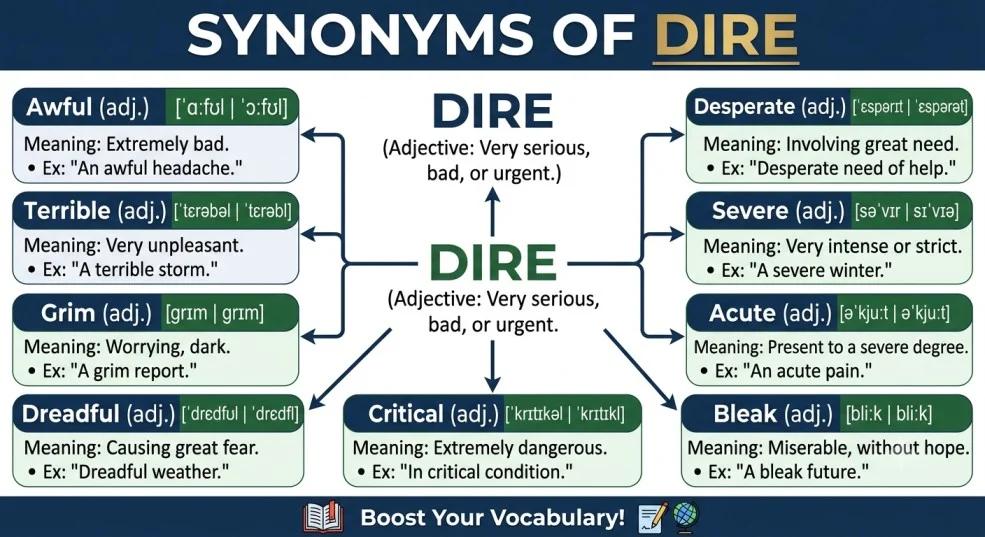
Imagine waking up to find your kitchen flooded and your phone dead. You are facing a dire situation. This small word carries immense weight, which is why people use it so often to describe urgent crises. For English learners and content writers, repeating the same word makes text dull. Learning synonyms expands your vocabulary and keeps your readers engaged.
This article explores the meaning, history, grammar, and pronunciation of dire. We will also explore 30 powerful synonyms divided into categories with clear examples to help you master this essential vocabulary word.
Meaning of Dire
Definition
dire (adjective):
Very serious, bad, or urgent.
Examples
- The family was in dire need of food after the storm.
- The company faces dire financial problems this year.
Connotative Meaning
(Connotation is the emotional feeling or cultural meaning that a word carries beyond its literal definition.)
- Positive tone: None. This word is almost never used in a positive way.
- Negative tone: Extremely strong. It brings up feelings of fear, deep worry, and hopelessness.
- Neutral tone: Rare, but it can be used in official weather or economic reports to state facts without panic.
Etymology
- Origin: From the Latin word dirus, which means fearful, awful, or threatening.
- Old English (450–1100): The word did not exist in Old English, as Anglo-Saxon words like gryre (terror) were used instead.
- Middle English (1100–1500): Entered the language in the late 15th century through Old French and Latin to describe terrible events.
- Modern English (1500–Present): Settled into its current meaning of describing urgent, disastrous, or extreme circumstances.
Pronunciation
- US: /daɪər/
- UK: /daɪə/
Syllables
di-re
Affixation Pattern of Dire
- Root: dire
- Prefix: None
- Suffix: None
- Word Formation:
- Direly (adverb): Doing something in a terrible or desperate way.
- Direness (noun): The state or quality of being awful or urgent.
A List of 30 Synonyms for Dire
1. Awful (adjective)
- US: /ˈɑːfʊl/ | UK: /ˈɔːfʊl/
- Meaning: Extremely bad or unpleasant.
- Examples:
- The team made an awful mistake during the game.
- She had an awful headache and went to bed early.
2. Terrible (adjective)
- US: /ˈtɛrəbəl/ | UK: /ˈtɛrəbl/
- Meaning: Very unpleasant or serious.
- Examples:
- A terrible storm destroyed the old wooden bridge.
- I have a terrible feeling that we are lost.
3. Grim (adjective)
- US: /ɡrɪm/ | UK: /ɡrɪm/
- Meaning: Worrying, dark, or without hope.
- Examples:
- The doctor gave us a grim report about his health.
- The news about the economy looks very grim.
4. Dreadful (adjective)
- US: /ˈdrɛdfʊl/ | UK: /ˈdrɛdfl/
- Meaning: Causing great fear, sadness, or discomfort.
- Examples:
- The weather this weekend was absolutely dreadful.
- They suffered a dreadful loss in the final match.
5. Critical (adjective)
- US: /ˈkrɪtɪkəl/ | UK: /ˈkrɪtɪkl/
- Meaning: Extremely important or dangerous.
- Examples:
- The patient is in critical condition at the hospital.
- We have reached a critical point in our project.
6. Desperate (adjective)
- US: /ˈdɛspərɪt/ | UK: /ˈdɛspərət/
- Meaning: Involving a great need or danger.
- Examples:
- The refugees are in desperate need of clean water.
- He made a desperate attempt to fix the engine.
7. Severe (adjective)
- US: /səˈvɪr/ | UK: /sɪˈvɪə/
- Meaning: Very intense, strict, or harsh.
- Examples:
- The northern part of the country faces a severe winter.
- The virus caused a severe pain in his chest.
8. Urgent (adjective)
- US: /ˈɜːrdʒənt/ | UK: /ˈɜːdʒənt/
- Meaning: Requiring immediate action or attention.
- Examples:
- I received an urgent message from my boss today.
- The building needs urgent repairs before it collapses.
9. Acute (adjective)
- US: /əˈkjuːt/ | UK: /əˈkjuːt/
- Meaning: Present to a severe or intense degree.
- Examples:
- There is an acute shortage of housing in the city.
- She felt an acute pain in her left leg.
10. Bleak (adjective)
- US: /bliːk/ | UK: /bliːk/
- Meaning: Cold, miserable, and without hope.
- Examples:
- The future looks bleak for that failing business.
- They looked out at the bleak winter landscape.
11. Crucial (adjective)
- US: /ˈkruːʃəl/ | UK: /ˈkruːʃl/
- Meaning: Extremely important for the success of something.
- Examples:
- Vitamins play a crucial role in keeping us healthy.
- This meeting is crucial for our new contract.
12. Drastic (adjective)
- US: /ˈdræstɪk/ | UK: /ˈdræstɪk/
- Meaning: Likely to have a strong or far-reaching effect.
- Examples:
- We need to take drastic measures to save money.
- The government made a drastic change to the tax law.
13. Horrible (adjective)
- US: /ˈhɔːrəbəl/ | UK: /ˈhɒrəbl/
- Meaning: Causing horror, shock, or disgust.
- Examples:
- The traffic on the highway was horrible this morning.
- She told us a horrible story about the accident.
14. Extreme (adjective)
- US: /ɪkˈstriːm/ | UK: /ɪkˈstriːm/
- Meaning: Reaching a very high degree or limit.
- Examples:
- The athletes trained in extreme heat waves.
- This sport carries an extreme risk of injury.
15. Catastrophic (adjective)
- US: /ˌkætəˈstrɑːfɪk/ | UK: /ˌkætəˈstrɒfɪk/
- Meaning: Causing sudden and great damage or suffering.
- Examples:
- A catastrophic flood destroyed the entire village.
- The failure of the system led to catastrophic results.
16. Disastrous (adjective)
- US: /dɪˈzæstrəs/ | UK: /dɪˈzɑːstrəs/
- Meaning: Causing great distress or injury.
- Examples:
- The party was a disastrous mess from start to finish.
- Making that wrong choice had disastrous effects on his career.
17. Grave (adjective)
- US: /ɡreɪv/ | UK: /ɡreɪv/
- Meaning: Serious, heavy, and causing worry.
- Examples:
- The minister spoke about a grave threat to peace.
- You have made a grave error in your math calculations.
18. Perilous (adjective)
- US: /ˈpɛrələs/ | UK: /ˈpɛrələs/
- Meaning: Full of danger or risk.
- Examples:
- The sailors made a perilous journey across the stormy sea.
- Hiking up the icy mountain path is a perilous task.
19. Hazardous (adjective)
- US: /ˈhæzərdəs/ | UK: /ˈhæzədəs/
- Meaning: Risky or dangerous to health or safety.
- Examples:
- Drivers must avoid the hazardous road conditions tonight.
- Please wear gloves when handling hazardous chemicals.
20. Bad (adjective)
- US: /bæd/ | UK: /bæd/
- Meaning: Of poor quality or harmful.
- Examples:
- Eating too much sugar is bad for your teeth.
- He gave me some bad advice about my car.
21. Poor (adjective)
- US: /pʊr/ | UK: /pɔː/
- Meaning: Of a very low standard or quality.
- Examples:
- The student showed poor attendance this semester.
- The plants died because of the poor soil quality.
22. Pressing (adjective)
- US: /ˈprɛsɪŋ/ | UK: /ˈprɛsɪŋ/
- Meaning: Needing immediate attention or action.
- Examples:
- Poverty remains a pressing issue in many countries.
- I must leave now because I have pressing business.
23. Shocking (adjective)
- US: /ˈʃɑːkɪŋ/ | UK: /ˈʃɒkɪŋ/
- Meaning: Causing an intense feeling of surprise and dismay.
- Examples:
- The news of his sudden departure was truly shocking.
- We discovered a shocking amount of waste in the office.
24. Heavy (adjective)
- US: /ˈhɛvi/ | UK: /ˈhɛvi/
- Meaning: Severe or intense in amount or force.
- Examples:
- The city experienced heavy losses during the economic crash.
- There is heavy traffic on the main road today.
25. Serious (adjective)
- US: /ˈsɪriəs/ | UK: /ˈsɪəriəs/
- Meaning: Significant, worrying, and not lighthearted.
- Examples:
- Crime is a serious problem in big cities.
- The two drivers escaped without serious injuries.
26. Apocalyptic (adjective)
- US: /əˌpɑːkəˈlɪptɪk/ | UK: /əˌpɒkəˈlɪptɪk/
- Meaning: Describing total destruction or the end of the world.
- Examples:
- The empty streets gave the city an apocalyptic feel.
- The movie shows an apocalyptic future after a world war.
27. Cruel (adjective)
- US: /ˈkruːəl/ | UK: /ˈkruːəl/
- Meaning: Causing pain or suffering on purpose.
- Examples:
- The cold winter was a cruel blow to the homeless.
- It is cruel to leave a dog outside in the heat.
28. Menacing (adjective)
- US: /ˈmɛnəsɪŋ/ | UK: /ˈmɛnəsɪŋ/
- Meaning: Suggesting the presence of danger; threatening.
- Examples:
- Dark, menacing clouds rolled in from the west.
- He spoke to the guards in a menacing tone.
29. Fatal (adjective)
- US: /ˈfeɪtəl/ | UK: /ˈfeɪtl/
- Meaning: Causing ruin, failure, or death.
- Examples:
- A fatal flaw in the design made the plane unsafe.
- The driver suffered a fatal accident on the highway.
30. Ominous (adjective)
- US: /ˈɑːmənəs/ | UK: /ˈɒmɪnəs/
- Meaning: Giving the impression that something bad is going to happen.
- Examples:
- There was an ominous silence inside the old house.
- The dark sky looked ominous before the storm started.
Prototype Meaning
The prototype meaning of dire is a situation of extreme, immediate danger that threatens someone’s survival or basic safety. When people hear this word, they usually imagine natural disasters, starving communities, collapsing economies, or a person trapped with no easy escape. It implies that if help does not arrive immediately, something truly awful will happen.
Prototype Categorization
- Immediate Urgency: Urgent, pressing, critical, desperate, acute.
- Extreme Danger: Perilous, hazardous, fatal, menacing, ominous.
- Massive Scale/Ruined State: Catastrophic, disastrous, apocalyptic, bleak, grim.
- General Quality or Pain: Awful, terrible, dreadful, severe, horrible, bad, poor, heavy, serious, shocking, drastic, extreme, crucial, cruel.
Categorizing these synonyms helps writers select the perfect word for their specific needs. For example, use urgent when time is running out, but choose catastrophic when describing widespread physical destruction.
Antonyms of Dire
- Good (adjective): High quality, helpful, or pleasant.
- Bright (adjective): Full of hope, light, or a happy future.
- Fortunate (adjective): Lucky or bringing good results.
- Mild (adjective): Not severe, gentle, or calm.
- Trivial (adjective): Small, unimportant, and not serious.
Short Questions and Answers
- What does dire mean?
- It means extremely serious, bad, urgent, or full of danger.
- When should dire be used?
- Use it when describing severe problems like food shortages, financial ruin, or life-or-death situations.
- Is dire positive or negative?
- It is almost always negative because it relates to crises and disasters.
- How is it different from similar words?
- Words like “bad” are common and weak, while “dire” shows that a situation is critical and needs immediate help.
Conclusion
Learning the word dire and its 30 synonyms is an excellent way to improve your vocabulary. Using a variety of descriptive words strengthens your writing and speaking by adding precision and emotion. Instead of repeating basic words like “bad” or “hard,” you can now choose specific terms like “perilous” or “catastrophic.” This practice avoids boring repetition and builds your English confidence in daily conversations or professional writing. Try to practice at least one new synonym every day to make your language natural and powerful!

I am a linguist with 17 years of experience in English language teaching, including postgraduate-level instruction. My expertise includes English grammar, and I contribute as a content and blog writer, producing scholarly and educational language resources.