
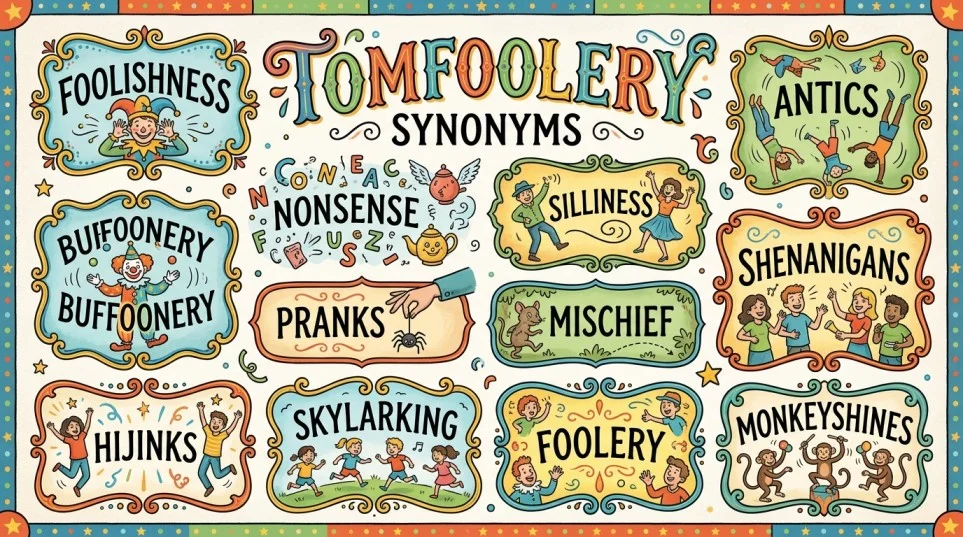
Tomfoolery means silly or playful behavior. Imagine a group of friends joking loudly, making funny faces, and acting a bit childish at a party. That is tomfoolery. People use this word often in daily talk when someone acts in a foolish but harmless way.
Learning synonyms is important for English learners and writers. It helps you speak clearly and avoid repeating the same word again and again. It also makes your writing more fun and rich.
In this article, you will learn the meaning of tomfoolery and its synonyms with simple examples. You will also learn its grammar, history, pronunciation, and different meanings. Everything is explained in clear and easy English.
Meaning of Tomfoolery
Definition
Tomfoolery (noun): silly, playful, or foolish behavior that is not serious.
Examples
- The kids were full of tomfoolery at the picnic.
- His tomfoolery made everyone laugh.
Connotative Meaning
- Positive tone: fun, playful, light-hearted
- Negative tone: childish, foolish, annoying
- Neutral tone: harmless, casual behavior
(Connotation means the feeling or emotion a word gives, beyond its basic meaning.)
Etymology
- From English words “Tom fool” (a silly person) + “-ery” (state or behavior)
Short History:
- Old English (450–1100): No direct use, but “fool” existed
- Middle English (1100–1500): “Tom fool” used for a silly man
- Modern English (1500–Present): “Tomfoolery” became common for foolish acts
Pronunciation (US & UK – IPA)
- US: /tɑːmˈfuːləri/
- UK: /tɒmˈfuːləri/
Syllables
tom-fool-er-y
Affixation Pattern of Tomfoolery
- Root: fool
- Prefix: none
- Suffix: -ery
Word Formation:
- fool (noun)
- foolish (adjective)
- fooling (verb)
- tomfoolery (noun)
A List of 30 Synonyms for Tomfoolery
1. Foolishness (noun)
US: /ˈfuːlɪʃnəs/ | UK: /ˈfuːlɪʃnəs/
Meaning: lack of good sense; silly behavior
Examples:
- His foolishness caused trouble.
- They laughed at his foolishness.
2. Nonsense (noun)
US: /ˈnɑːnsens/ | UK: /ˈnɒnsens/
Meaning: words or actions with no meaning
Examples:
- Stop this nonsense.
- His idea sounded like nonsense.
3. Buffoonery (noun)
US: /bəˈfuːnəri/ | UK: /bəˈfuːnəri/
Meaning: funny but silly acting
Examples:
- The show was full of buffoonery.
- His buffoonery made people laugh.
4. Clowning (noun)
US: /ˈklaʊnɪŋ/ | UK: /ˈklaʊnɪŋ/
Meaning: acting like a clown
Examples:
- Stop clowning in class.
- He enjoys clowning around.
5. Horseplay (noun)
US: /ˈhɔːrspleɪ/ | UK: /ˈhɔːspleɪ/
Meaning: rough or playful behavior
Examples:
- The boys were engaged in horseplay.
- Too much horseplay is unsafe.
6. Shenanigans (noun)
US: /ʃəˈnænɪɡənz/ | UK: /ʃɪˈnænɪɡənz/
Meaning: playful tricks or mischief
Examples:
- Their shenanigans annoyed the teacher.
- Kids love silly shenanigans.
7. Antics (noun)
US: /ˈæntɪks/ | UK: /ˈæntɪks/
Meaning: funny or silly actions
Examples:
- His antics made us laugh.
- The dog’s antics were cute.
8. Goofiness (noun)
US: /ˈɡuːfinəs/ | UK: /ˈɡuːfinəs/
Meaning: silly and playful nature
Examples:
- I like his goofiness.
- Her goofiness is fun.
9. Mischief (noun)
US: /ˈmɪstʃɪf/ | UK: /ˈmɪstʃɪf/
Meaning: playful trouble-making
Examples:
- The child is full of mischief.
- His mischief was harmless.
10. Playfulness (noun)
US: /ˈpleɪfəl.nəs/ | UK: /ˈpleɪfəl.nəs/
Meaning: light and fun behavior
Examples:
- Her playfulness is sweet.
- The puppy shows playfulness.
11. Frivolity (noun)
US: /frɪˈvɑːləti/ | UK: /frɪˈvɒləti/
Meaning: lack of seriousness
Examples:
- The event had too much frivolity.
- His tone showed frivolity.
12. Absurdity (noun)
US: /əbˈsɝːdəti/ | UK: /əbˈsɜːdəti/
Meaning: something very silly
Examples:
- The idea was pure absurdity.
- He laughed at the absurdity.
13. Ridiculousness (noun)
US: /rɪˈdɪkjələsnəs/ | UK: /rɪˈdɪkjələsnəs/
Meaning: extreme silliness
Examples:
- The situation was full of ridiculousness.
- They joked about the ridiculousness.
14. Jokery (noun)
US: /ˈdʒoʊkəri/ | UK: /ˈdʒəʊkəri/
Meaning: joking behavior
Examples:
- His jokery made us smile.
- Stop this jokery now.
15. Silliness (noun)
US: /ˈsɪlinəs/ | UK: /ˈsɪlinəs/
Meaning: lack of seriousness
Examples:
- Kids love silliness.
- His silliness is harmless.
16. Goofing (noun)
US: /ˈɡuːfɪŋ/ | UK: /ˈɡuːfɪŋ/
Meaning: acting in a silly way
Examples:
- They were goofing around.
- Stop goofing and work.
17. Pranks (noun)
US: /præŋks/ | UK: /prɑːŋks/
Meaning: playful tricks
Examples:
- Students played pranks.
- The prank was funny.
18. Farce (noun)
US: /fɑːrs/ | UK: /fɑːs/
Meaning: silly situation or act
Examples:
- The plan became a farce.
- It felt like a farce.
19. Mockery (noun)
US: /ˈmɑːkəri/ | UK: /ˈmɒkəri/
Meaning: making fun of something
Examples:
- His tone was mockery.
- They used mockery to tease him.
20. Levity (noun)
US: /ˈlevɪti/ | UK: /ˈlevɪti/
Meaning: light humor
Examples:
- He spoke with levity.
- The speech lacked levity.
21. Jest (noun)
US: /dʒest/ | UK: /dʒest/
Meaning: a joke
Examples:
- He spoke in jest.
- It was only a jest.
22. Fooling (noun)
US: /ˈfuːlɪŋ/ | UK: /ˈfuːlɪŋ/
Meaning: acting silly
Examples:
- They were fooling around.
- Stop fooling now.
23. Lightheartedness (noun)
US: /ˌlaɪtˈhɑːrtɪdnəs/ | UK: /ˌlaɪtˈhɑːtɪdnəs/
Meaning: cheerful and carefree mood
Examples:
- Her lightheartedness is nice.
- The movie shows lightheartedness.
24. Banter (noun)
US: /ˈbæntər/ | UK: /ˈbæntə/
Meaning: playful talk
Examples:
- Friends enjoyed banter.
- Their banter was funny.
25. Larking (noun)
US: /ˈlɑːrkɪŋ/ | UK: /ˈlɑːkɪŋ/
Meaning: playful fun
Examples:
- Kids were larking about.
- Too much larking wastes time.
26. Hijinks (noun)
US: /ˈhaɪdʒɪŋks/ | UK: /ˈhaɪdʒɪŋks/
Meaning: wild or playful acts
Examples:
- Their hijinks were loud.
- The party was full of hijinks.
27. Drollery (noun)
US: /ˈdroʊləri/ | UK: /ˈdrəʊləri/
Meaning: funny and odd humor
Examples:
- His drollery is unique.
- The play used drollery.
28. Folly (noun)
US: /ˈfɑːli/ | UK: /ˈfɒli/
Meaning: foolish action
Examples:
- It was a great folly.
- His folly cost him money.
29. Witlessness (noun)
US: /ˈwɪtləsnəs/ | UK: /ˈwɪtləsnəs/
Meaning: lack of intelligence
Examples:
- His witlessness was clear.
- They laughed at his witlessness.
30. Naughtiness (noun)
US: /ˈnɔːtinəs/ | UK: /ˈnɔːtinəs/
Meaning: playful bad behavior
Examples:
- The child showed naughtiness.
- Her naughtiness is cute.
Prototype Meaning
The most common meaning of tomfoolery is silly and playful behavior that makes people laugh. People imagine jokes, funny actions, and harmless fun.
Prototype Categorization
- Playful behavior: antics, clowning, larking
- Silly thinking: foolishness, absurdity, folly
- Humor and jokes: jest, banter, drollery
- Mischief actions: pranks, shenanigans, hijinks
Categorization helps writers choose the right word. For example, use “pranks” for tricks and “banter” for friendly talk.
Antonyms of Tomfoolery
- Seriousness (noun): being serious
- Wisdom (noun): good judgment
- Sense (noun): practical thinking
- Maturity (noun): adult behavior
Short Questions and Answers
- What does tomfoolery mean?
It means silly or playful behavior. - When should tomfoolery be used?
Use it for fun, harmless, or childish actions. - Is tomfoolery positive or negative?
It can be both, depending on context. - How is it different from similar words?
It focuses on playful foolish behavior, not serious mistakes.
CONCLUSION
Learning the word tomfoolery and its synonyms helps improve your vocabulary. It makes your speaking and writing more lively and clear. You can avoid repeating the same words and express ideas better. It also helps you understand tone, whether playful or negative.
By practicing these words daily, you will gain more confidence in English. Try to use one new word each day in a sentence. Over time, your language skills will grow stronger and more natural.

I am a linguist with 17 years of experience in English language teaching, including postgraduate-level instruction. My expertise includes English grammar, and I contribute as a content and blog writer, producing scholarly and educational language resources.