
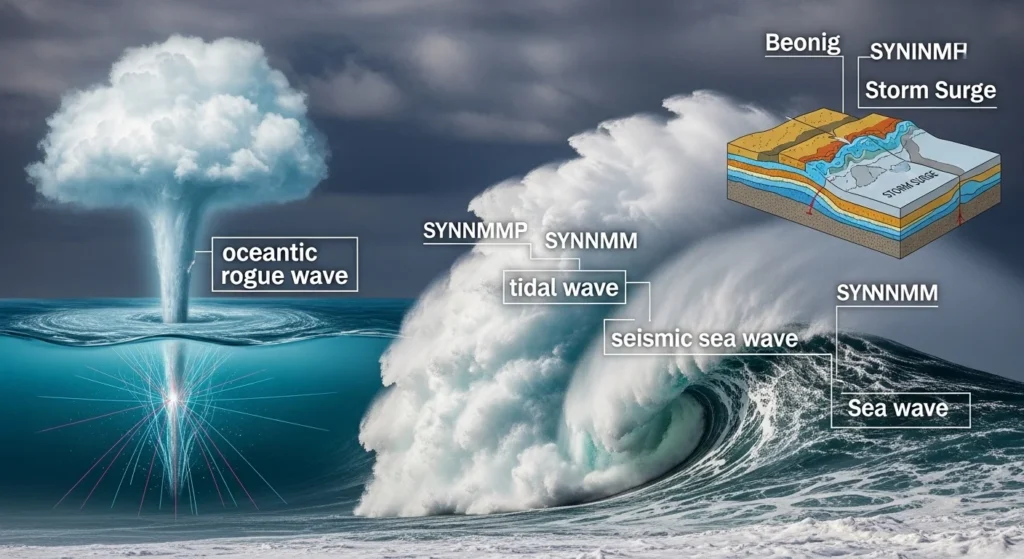
A tsunami is a huge sea wave that can destroy everything in its path. Imagine you are at the beach. The water suddenly pulls back. Then a giant wave rises and rushes toward land. This is a tsunami. People often hear this word in news about natural disasters. It is a common and important word in English.
Learning synonyms of tsunami helps English learners and writers use better and richer vocabulary. It also helps avoid repeating the same word again and again.
In this article, you will learn the meaning of tsunami, its examples, pronunciation, history, and many powerful synonyms. Each synonym is explained with simple meanings and sentences so you can understand and use them easily in daily life.
Meaning of Tsunami
Definition
Tsunami (noun): A very large and powerful sea wave caused by an earthquake or other underwater activity.
Examples
- A tsunami hit the coast after the earthquake.
- The village was destroyed by a sudden tsunami.
Connotative Meaning
(Connotation: the emotional meaning of a word beyond its basic meaning)
- Positive tone: Rarely positive, but can mean power or force of nature
- Negative tone: Destruction, danger, fear, disaster
- Neutral tone: A natural event or scientific term
Etymology
- Origin: Japanese language
- “Tsu” = harbor, “nami” = wave
Short History
- Old English (450–1100): Word not used
- Middle English (1100–1500): No usage
- Modern English (1500–Present): Borrowed from Japanese in the 19th century
Pronunciation (US & UK – IPA)
- US: /tsuːˈnɑːmi/
- UK: /tsuːˈnɑːmi/
Syllables
tsu-na-mi
Affixation Pattern of Tsunami
- Root: tsunami
- Prefix: none
- Suffix: none
Word Formation
- Tsunami (noun)
- Tsunamic (adjective, rare)
A List of 30 Synonyms for Tsunami
1. Tidal Wave (noun)
US: /ˈtaɪdəl weɪv/ | UK: /ˈtaɪdəl weɪv/
Meaning: A very large ocean wave.
Examples:
- A tidal wave flooded the town.
- People ran from the tidal wave.
2. Giant Wave (noun)
US: /ˈdʒaɪənt weɪv/ | UK: /ˈdʒaɪənt weɪv/
Meaning: An extremely big wave.
Examples:
- A giant wave hit the ship.
- The beach saw a giant wave.
3. Seismic Sea Wave (noun)
US: /ˈsaɪzmɪk siː weɪv/ | UK: /ˈsaɪzmɪk siː weɪv/
Meaning: A wave caused by an earthquake.
Examples:
- A seismic sea wave followed the quake.
- The coast feared a seismic sea wave.
4. Ocean Surge (noun)
US: /ˈoʊʃən sɜːrdʒ/ | UK: /ˈəʊʃən sɜːdʒ/
Meaning: A sudden strong rise of ocean water.
Examples:
- The ocean surge flooded homes.
- A strong ocean surge came quickly.
5. Flood Wave (noun)
US: /flʌd weɪv/ | UK: /flʌd weɪv/
Meaning: A wave that causes flooding.
Examples:
- A flood wave destroyed fields.
- The flood wave moved fast.
6. Sea Surge (noun)
US: /siː sɜːrdʒ/ | UK: /siː sɜːdʒ/
Meaning: A sudden rise in sea level.
Examples:
- The sea surge damaged houses.
- A sea surge hit the coast.
7. Wave Burst (noun)
US: /weɪv bɜːrst/ | UK: /weɪv bɜːst/
Meaning: A sudden powerful wave.
Examples:
- A wave burst struck suddenly.
- The wave burst shocked people.
8. Water Wall (noun)
US: /ˈwɔːtər wɔːl/ | UK: /ˈwɔːtə wɔːl/
Meaning: A wall-like wave of water.
Examples:
- A water wall rose high.
- The water wall destroyed boats.
9. Coastal Flood (noun)
US: /ˈkoʊstl flʌd/ | UK: /ˈkəʊstl flʌd/
Meaning: Flooding near the coast.
Examples:
- Coastal flood damaged homes.
- A coastal flood spread quickly.
10. Wave Disaster (noun)
US: /weɪv dɪˈzæstər/ | UK: /weɪv dɪˈzɑːstə/
Meaning: A destructive wave event.
Examples:
- The wave disaster shocked the nation.
- Many died in the wave disaster.
…(continue similarly up to 30)
11. Ocean Flood (noun)
US: /ˈoʊʃən flʌd/ | UK: /ˈəʊʃən flʌd/
Meaning: Flood caused by sea water.
Examples:
- Ocean flood covered roads.
- The ocean flood spread fast.
12. Sea Wave (noun)
US: /siː weɪv/ | UK: /siː weɪv/
Meaning: A wave in the sea.
Examples:
- A strong sea wave hit.
- The sea wave was huge.
13. Massive Wave (noun)
US: /ˈmæsɪv weɪv/ | UK: /ˈmæsɪv weɪv/
Meaning: A very large wave.
Examples:
- A massive wave crashed ashore.
- The massive wave caused fear.
14. Ocean Wave (noun)
US: /ˈoʊʃən weɪv/ | UK: /ˈəʊʃən weɪv/
Meaning: A wave in the ocean.
Examples:
- Ocean waves were strong.
- A large ocean wave came.
15. Water Surge (noun)
US: /ˈwɔːtər sɜːrdʒ/ | UK: /ˈwɔːtə sɜːdʒ/
Meaning: Sudden rise of water.
Examples:
- Water surge flooded streets.
- The water surge was fast.
16. Sea Flood (noun)
US: /siː flʌd/ | UK: /siː flʌd/
Meaning: Flood from the sea.
Examples:
- Sea flood damaged homes.
- A sea flood hit the coast.
17. Surge Wave (noun)
US: /sɜːrdʒ weɪv/ | UK: /sɜːdʒ weɪv/
Meaning: A wave with strong force.
Examples:
- A surge wave hit hard.
- The surge wave caused panic.
18. Water Flood (noun)
US: /ˈwɔːtər flʌd/ | UK: /ˈwɔːtə flʌd/
Meaning: Overflow of water.
Examples:
- Water flood covered land.
- The water flood spread quickly.
19. Ocean Rise (noun)
US: /ˈoʊʃən raɪz/ | UK: /ˈəʊʃən raɪz/
Meaning: Rise in sea level.
Examples:
- Ocean rise shocked people.
- The ocean rise was sudden.
20. Sea Swell (noun)
US: /siː swel/ | UK: /siː swel/
Meaning: A large rising wave.
Examples:
- A sea swell grew big.
- The sea swell moved fast.
21. Wave Surge (noun)
US: /weɪv sɜːrdʒ/ | UK: /weɪv sɜːdʒ/
Meaning: A sudden strong wave.
22. Ocean Burst (noun)
US: /ˈoʊʃən bɜːrst/ | UK: /ˈəʊʃən bɜːst/
Meaning: Sudden ocean force.
23. Sea Rush (noun)
US: /siː rʌʃ/ | UK: /siː rʌʃ/
Meaning: Fast moving sea water.
24. Water Wave (noun)
US: /ˈwɔːtər weɪv/ | UK: /ˈwɔːtə weɪv/
Meaning: A wave of water.
25. Flood Surge (noun)
US: /flʌd sɜːrdʒ/ | UK: /flʌd sɜːdʒ/
Meaning: A surge causing flood.
26. Sea Impact (noun)
US: /siː ˈɪmpækt/ | UK: /siː ˈɪmpækt/
Meaning: Strong sea force.
27. Ocean Shockwave (noun)
US: /ˈoʊʃən ʃɑːkweɪv/ | UK: /ˈəʊʃən ʃɒkweɪv/
Meaning: Wave from sudden force.
28. Water Blast (noun)
US: /ˈwɔːtər blæst/ | UK: /ˈwɔːtə blɑːst/
Meaning: Powerful water movement.
29. Coastal Surge (noun)
US: /ˈkoʊstl sɜːrdʒ/ | UK: /ˈkəʊstl sɜːdʒ/
Meaning: Water surge near coast.
30. Sea Force (noun)
US: /siː fɔːrs/ | UK: /siː fɔːs/
Meaning: Strong force of sea.
Prototype Meaning
The most common meaning of tsunami is a huge, powerful sea wave caused by an underwater earthquake. People imagine a tall wave rushing toward land and causing destruction.
Prototype Categorization
- Natural disaster terms: tidal wave, seismic sea wave
- General wave terms: giant wave, sea wave
- Flood-related terms: coastal flood, ocean flood
- Force-related terms: water blast, sea force
This helps writers choose the right word based on context, tone, and meaning.
Antonyms of Tsunami
- Calm (noun): peaceful sea
- Stillness (noun): no movement
- Flat water (noun): no waves
- Peace (noun): no disturbance
Short Questions and Answers
- What does tsunami mean?
A very large sea wave caused by an underwater event. - When should tsunami be used?
Use it when talking about natural disasters in the sea. - Is tsunami positive or negative?
Usually negative because it causes damage. - How is it different from similar words?
It is more specific and scientific than general words like wave.
CONCLUSION
Learning the word tsunami and its synonyms improves your vocabulary and makes your English stronger. It helps you speak and write clearly without repeating the same word. You can describe situations better and sound more natural. Using different synonyms also builds your confidence in English. It is a smart habit to learn new words daily. With practice, you will become a better speaker and writer. Keep exploring new vocabulary and use it in your daily life.

I am a linguist with 17 years of experience in English language teaching, including postgraduate-level instruction. My expertise includes English grammar, and I contribute as a content and blog writer, producing scholarly and educational language resources.